Key Takeaways:
- Every Utopihen chicken egg carton carries the Certified Humane® Pasture Raised seal, an independently audited standard, not just a marketing claim.
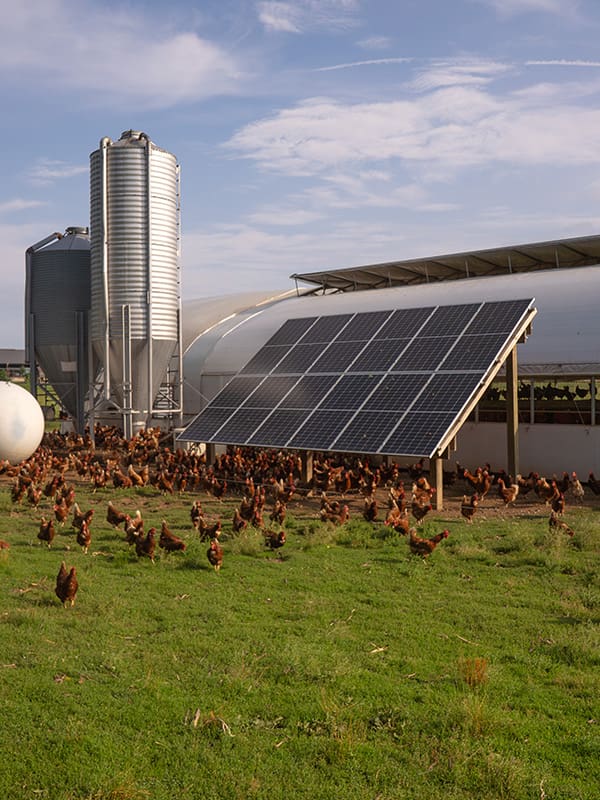
- Hens get a minimum of 110 square feet of pasture each, more than the 108-square-foot minimum required for Certified Humane Pasture Raised certification.
“Transparency” gets used a lot in food marketing, and not all of it means much. Terms like “humane” and “natural” aren’t regulated. Any brand can print them on a carton. What actually backs up a claim is whether someone outside the company can check it. This guide walks through what backs up Utopihen’s claims: the certifications, the space standards, the farm network, and how you can verify any of it yourself.
What Does “Farm Transparency” Actually Mean?
Transparency means a claim can be checked, not just stated.
A standard has requirements, an inspector, and a way to fail. A marketing phrase doesn’t.
Every major claim on a Utopihen carton ties back to something checkable:
- Certified Humane Pasture Raised – audited by Humane Farm Animal Care
- USDA Organic – certified on select egg lines
- Non-GMO – verified feed sourcing
None of it is self-certified.



Who Actually Raises Utopihen’s Hens?
Independent family farmers do, not Utopihen directly.
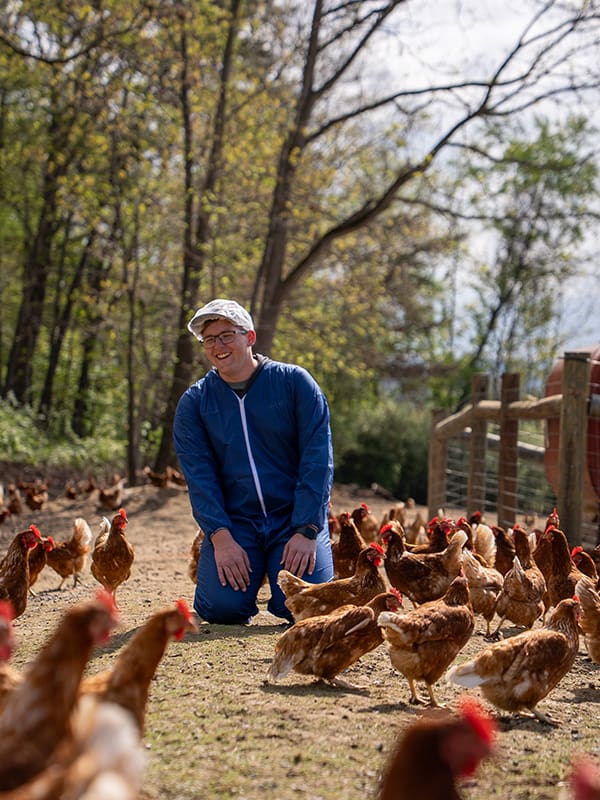
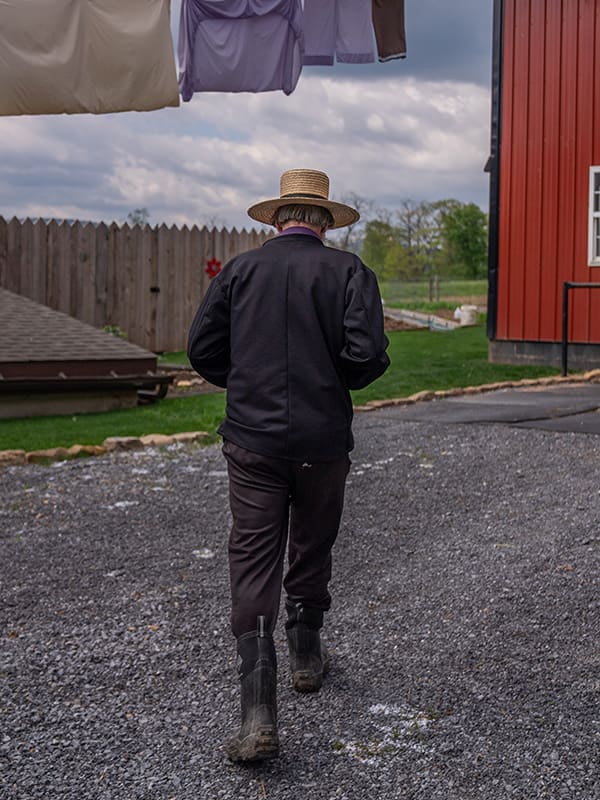
Utopihen partners with roughly 30 small farms, concentrated in Lancaster County, Pennsylvania, and the surrounding area. Each one is independently owned:
- Farmers own their own land and hens
- Farmers make their own day-to-day decisions
- Utopihen sets the welfare and certification standards every farm must meet. Utopihen handles packaging and retail so farmers can focus on the hens.
So when this site talks about “our farms,” it means a network of independently owned operations held to a shared standard, not a single company-run facility.
What Is Certified Humane, and Why Does It Matter?
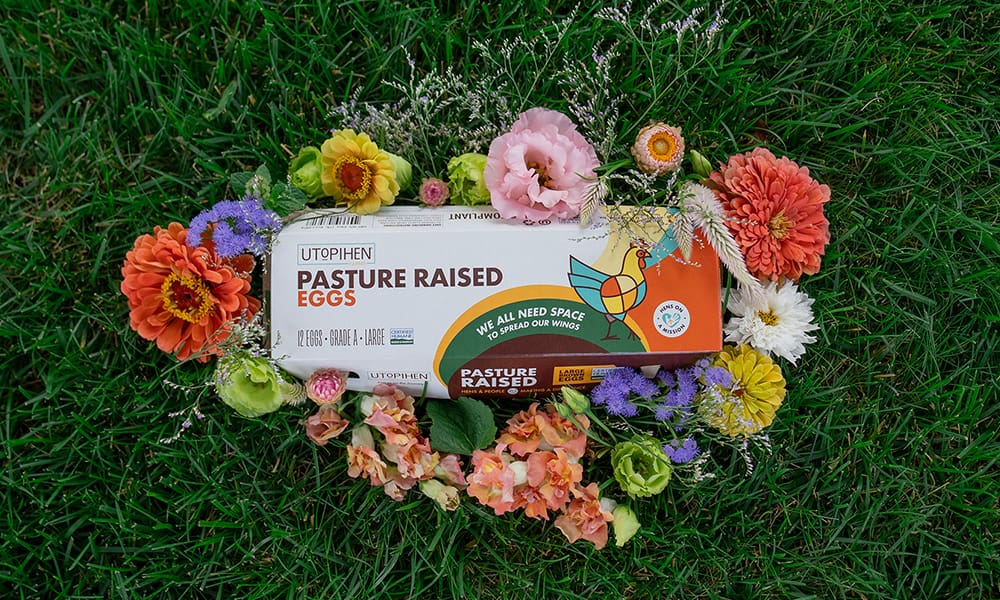
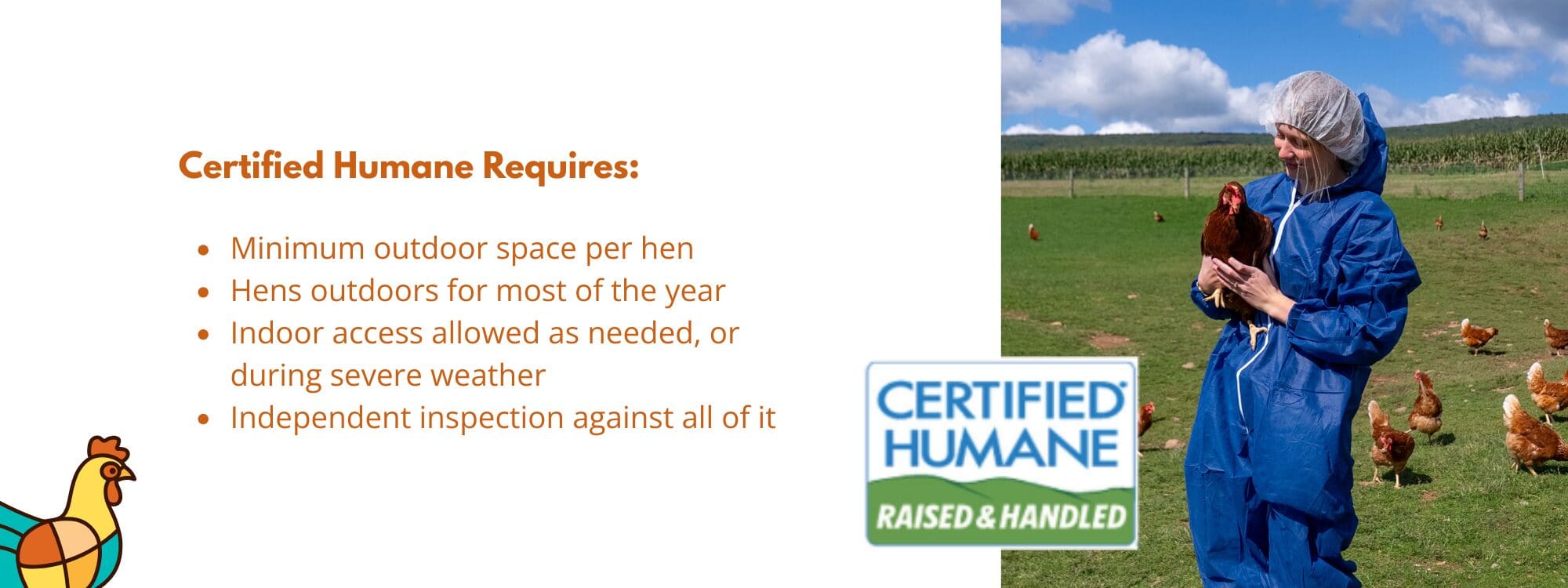
Certified Humane Pasture Raised is a third-party welfare certification from Humane Farm Animal Care, and every Utopihen chicken egg carton carries the seal.
Unlike unregulated words like “humane” or “natural,” this certification comes with specific, published requirements:
- Minimum outdoor space per hen
- Hens outdoors for most of the year
- Indoor access allowed as needed, or during severe weather
- Independent inspection against all of it
HFAC inspects farms against these requirements. Utopihen doesn’t decide whether it qualifies.
How Much Space Do Utopihen Hens Actually Get?
More than the certification requires.
Certified Humane Minimum | Utopihen | |
Pasture space per hen | 108 sq ft | 110 sq ft |
That 2-square-foot gap looks small, but it reflects something bigger: pasture space only means anything if flock size is actually controlled. A farm can claim generous acreage and still crowd it with more hens than the land can comfortably support.
Capping flock size is what makes a real per-hen number possible in the first place.
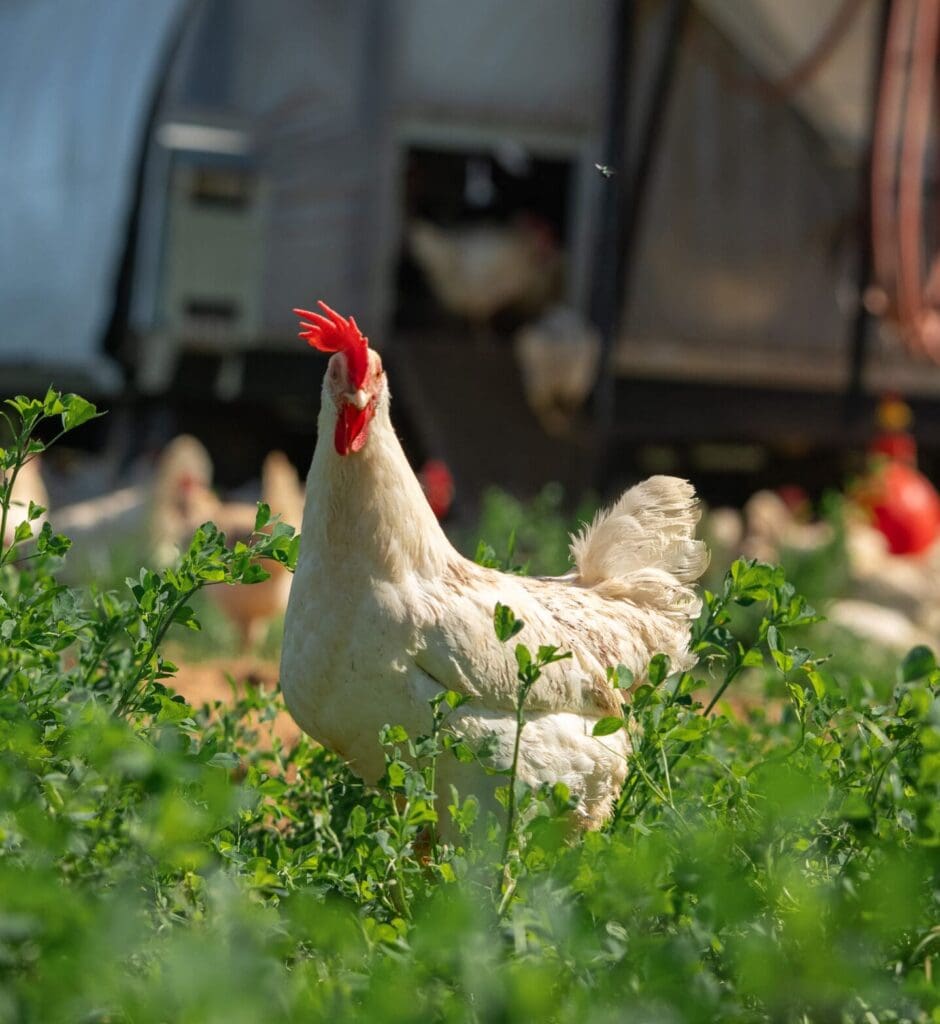
Hens are typically let outside in the morning and brought back in before dark, both for protection from predators and because that’s their natural rhythm for laying and settling in.
What Do Utopihen Hens Eat?
It depends on the egg line, but a few things hold across all of them:
- No antibiotics, ever
- No added hormones, ever
- Pasture access to supplement feed with grasses, seeds, and insects
Egg Line | Feed Standard | Certified Organic |
Pasture Raised Organic | Certified organic feed | Yes |
Original | Standard formulated feed | No |
Soy & Corn-Free | Feed formulated without soy or corn | No |
Soy & Corn-Free Organic | Certified organic feed formulated without soy or corn | Yes |
Duck | Standard formulated feed | No |
Is Every Utopihen Egg Organic?
No, and it’s worth checking the carton rather than assuming.
Organic is one of four egg lines, not a brand-wide claim.
The Organic Pasture Raised and Organic Soy & Corn-Free line meets USDA Organic requirements: certified feed, no synthetic pesticides, no GMOs, plus the same Certified Humane pasture standards every other line follows.
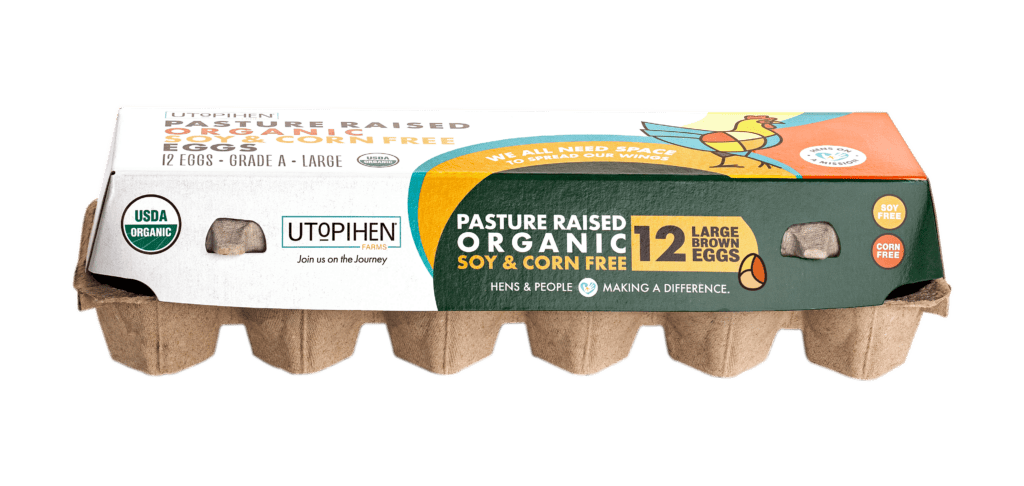
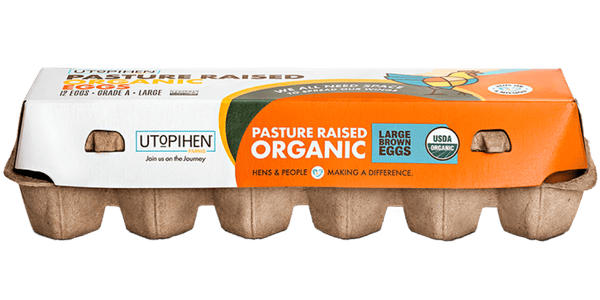
The Pasture Raised, Blue Eggs, Soy & Corn-Free, and Duck lines meet the same welfare and pasture requirements, but they aren’t certified organic. That distinction is easy to blur in marketing. It matters if you’re specifically shopping for organic certification.
What About Duck Eggs?
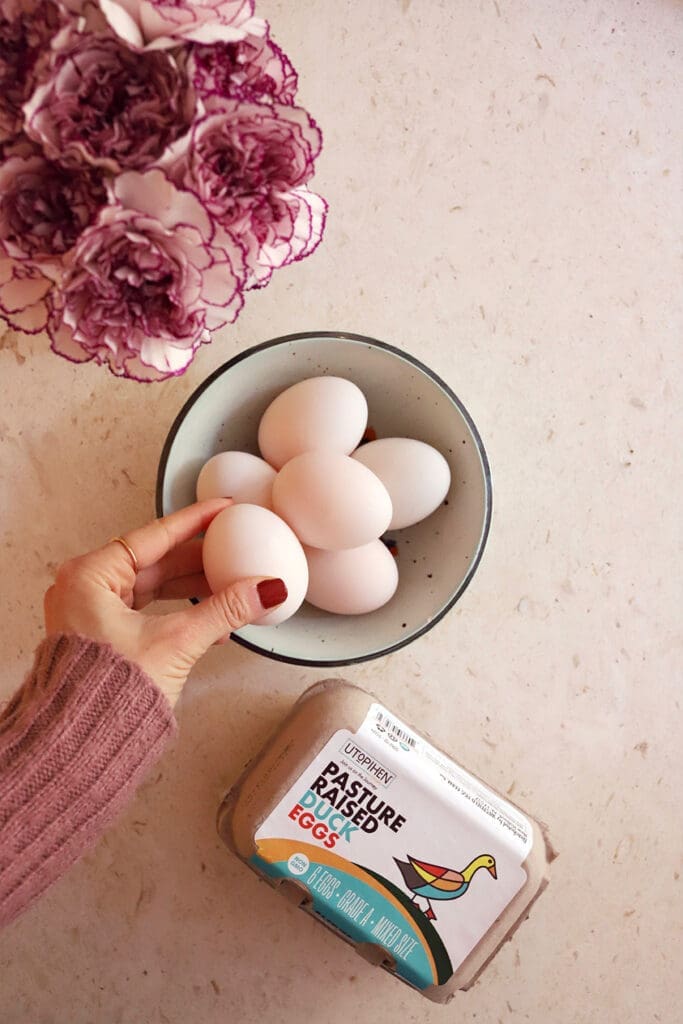
Certified Humane Duck Eggs are a new certification, spearheaded by the farm and leadership team at Utopihen Farms. Until recently, there was no Certified Humane certification specifically for duck eggs. We saw a need for stronger, clearer standards for ducks and decided to help change that.
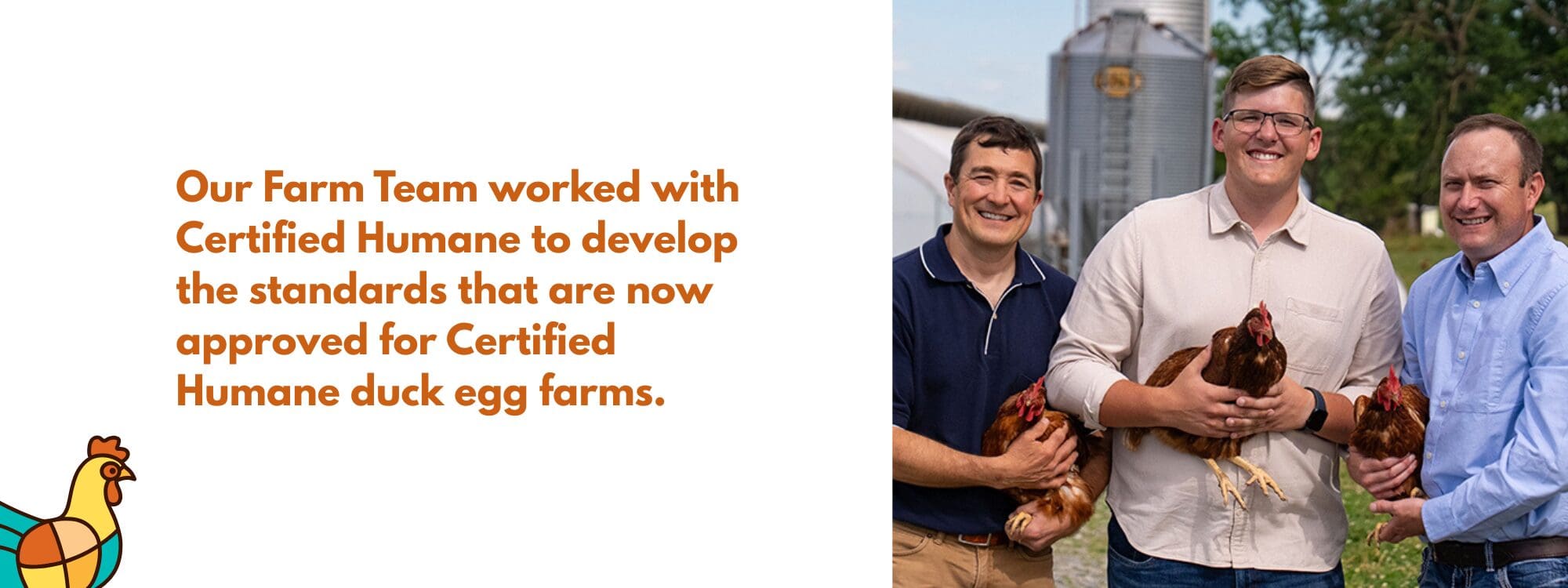
Our team worked with Certified Humane to develop the standards that are now approved for Certified Humane duck egg farms. Our duck farms already meet those standards, but they cannot carry the Certified Humane seal just yet.
That’s because Humane Farm Animal Care is still finalizing the certification process, not because duck farms are being held to a lower standard.
It’s worth saying plainly: a farm can raise ducks with genuine care and meet the same high standards without having the certification badge yet. The seal will be updated as soon as the certification process is finalized.
What Other Commitments Does Utopihen Make?
A few things beyond certification and pasture space:
- Eco-friendly packaging – cartons made from recycled materials
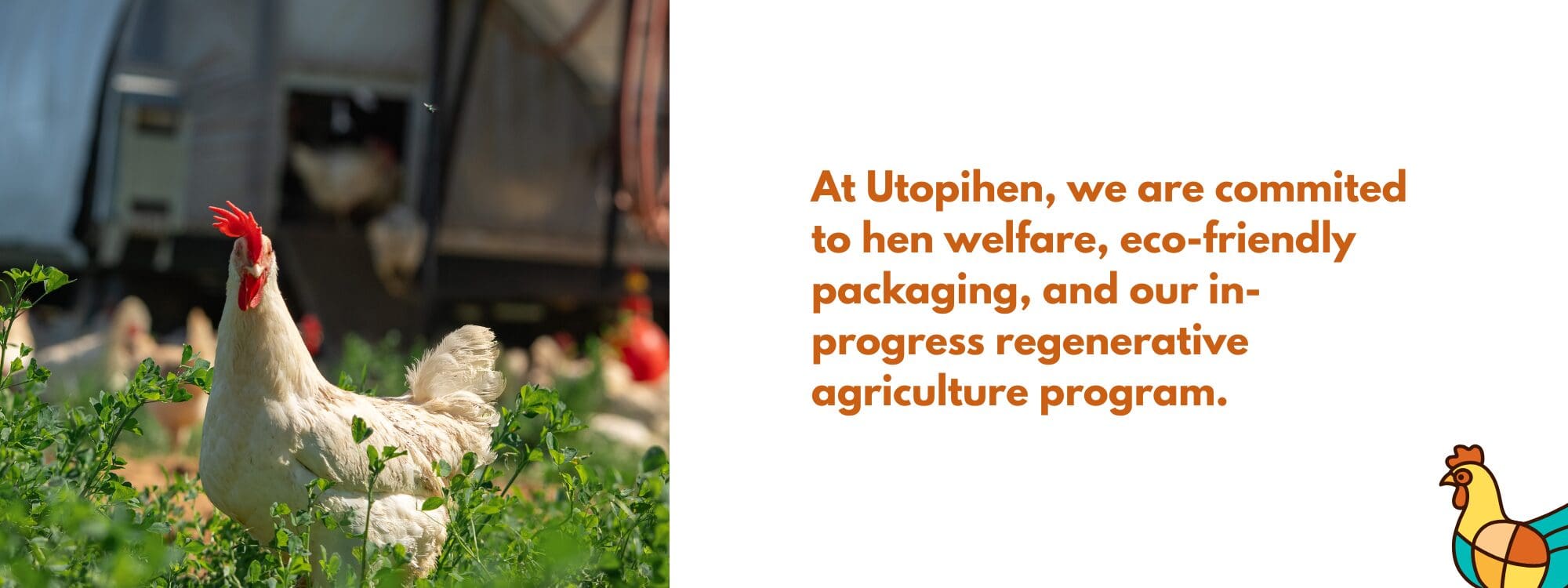
- Regenerative agriculture – an in-progress program aimed at improving soil and land health across partner farms
None of that replaces the core standards. Certified Humane, the pasture requirement, and the no-antibiotics-or-hormones policy are the foundation.
But transparency also means being honest about what’s still in progress, not just what’s finished. The regenerative agriculture work is an ongoing initiative, not a completed certification, and that distinction matters too.
Why Farm Transparency Matters
Egg labels aren’t just marketing terms. They represent real decisions about how hens are raised, what they eat, and how much space they have.
Choosing eggs backed by verifiable standards can support:
- Healthier hens
- Independent family farms
- More honest food labeling industry-wide
- Land and soil health through practices like pasture rotation
Every purchase sends a signal about the kind of food system that gets built next.
Frequently Asked Questions
1. Does Utopihen own the farms it sources eggs from?
No. Utopihen partners with independent farmers who own their own land and hens. Utopihen sets the standards; each farm is its own business.
2. Is Certified Humane the same as “cage-free” or “free-range”?
No. Certified Humane Pasture Raised is a specific, audited certification with its own space and handling requirements, well beyond what “cage-free” or “free-range” guarantee alone.
3. Do all Utopihen eggs qualify as organic?
No. Only the Pasture Raised Organic and Organic Soy and Corn Free lines are USDA Organic certified. The other three lines meet the same welfare standards but aren’t certified organic.
4. How much pasture does each hen actually get?
A minimum of 110 square feet, more than the 108-square-foot Certified Humane Pasture Raised minimum.
5. Why don’t duck eggs carry the Certified Humane seal?
Because HFAC hasn’t finished developing a certification standard for ducks, Utopihen’s duck farms follow the same care standards as its certified chicken farms for now.
6. Do Utopihen hens ever receive antibiotics or hormones?
No, across every egg line, without exception.
A Final Thought
Transparency only means something if it’s checkable.
Every claim in this guide, the Certified Humane seal, the 110-square-foot pasture standard, the no-antibiotics policy, the independent farm network, ties back to something real: a certification body with published requirements.
That’s different from a brand simply telling you it cares. It’s worth knowing the difference, and worth asking any egg brand, including this one, to show its work rather than just state its values.
Support your local egg farmer today!