egg-icon-edited
CertifiedHumane_RGB_compress_transparent_v2
UF_non-GMOLogo_CMYK_compressed_transparent_v2

Pasture Raised Organic Eggs

Real pasture. Certified organic feed. Soil tested for pesticides and synthetic contaminants. Raised on farms in and around Lancaster County where the land is as clean as the egg.
Pasture Access

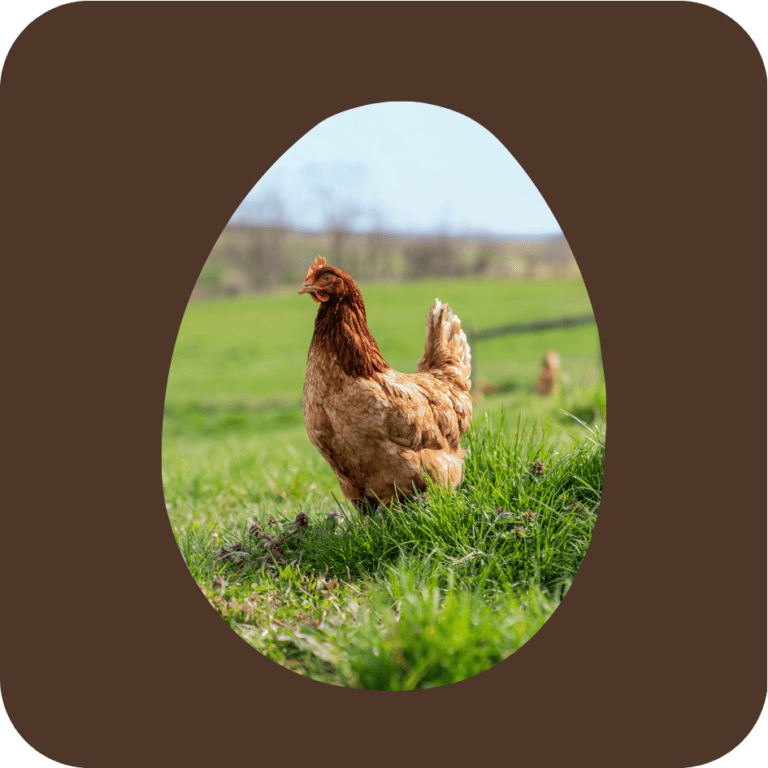
Our Pasture Raised Organic hens live on certified organic farms in the Lancaster County area with genuine daily outdoor access and 110 square feet of pasture per hen. They’re out on that land every morning and called back before dark. Real grass, real sunlight, and real space to move.

What makes these farms different from standard pasture raised operations is what’s happening in the soil. The pasture our hens forage on is tested for pesticides and synthetic contaminants. The ground itself has to meet organic certification standards, which means even the grass and plants the hens eat as part of their natural foraging are growing in certified organic soil.

Their supplemental feed is USDA-certified organic: no GMOs, no synthetic pesticides, no artificial additives. The sourcing is tightly controlled from the feed mill to the farm.

Everything about the way we farm is third-party verified by both USDA Organic certification and Certified Humane, two independent organizations with different standards that together cover the full picture of how the egg is produced.

Nutrition

Pasture Raised Organic eggs deliver the full nutritional benefit of genuine outdoor access, backed by a feed and soil system that keeps synthetic inputs out of the chain entirely.

  • Protein: About 6 grams per egg. A complete protein, with all nine essential amino acids.
  • Omega-3 fatty acids: Higher than in conventional eggs, driven by the varied outdoor foraging diet. Hens on real pasture eat grass, insects, and plants that raise the omega-3 content of their eggs in ways that grain-fed hens simply can’t match.
  • Vitamin D: Higher than in conventional eggs. Our hens spend their days in actual sunlight. That exposure shows up in the egg.
  • Fat-soluble vitamins: A, D, E, and K, all at higher levels than conventional eggs, concentrated in the yolk and coming from the varied outdoor diet.
  • Choline: A good source. Most people don’t get enough choline through diet, and it plays a meaningful role in brain health, liver function, and fetal development.
  • Lutein and zeaxanthin: Antioxidants in the yolk that support long-term eye health. The deep golden yolk color is a visible signal of their presence.
  • Calories: Roughly 70 to 90 per egg, depending on size.

What makes Organic Pasture Raised eggs nutritionally distinct is the absence of synthetic inputs anywhere in the system: from the soil the hens forage to the grain in the supplemental feed. For people who care about what’s in their food all the way down the chain, that matters.

You Might Also Like ...
PIN@4x with outline
Products Near Me

Find Utopihen eggs at local markets and stores near you.

Behind the Egg

Most of our organic hens are Hy-Line Browns, a sturdy, docile mixed breed known for consistent, high-quality brown eggs. They’re calm, friendly birds that take well to pasture life, and they’re a natural fit for the small family farms we source from in the Lancaster County area.

They spend their days moving through varied terrain: open organic pasture with fresh grass, areas of tall grass and natural brush, and trees that give them shade and a sense of having somewhere to go. The farms our organic hens live on are genuine working landscapes, not controlled environments, and that variety is part of what makes them produce good eggs.

The organic certification adds a layer that goes deeper than most people realize. It’s not just the feed. It’s the soil the forage grows in, the sourcing behind every ingredient in the supplemental diet, and an ongoing verification process that covers the whole farm system. Our organic hens are eating clean at every level.

egg Organic Hen

What Organic Actually Means Here

Organic is a word that gets used loosely. On a pasture-raised farm, it means something specific and worth understanding.

  • The feed is certified organic. No GMOs, no synthetic pesticides in feed ingredients, no artificial additives. Every ingredient in the supplemental feed has to meet USDA Organic standards and be sourced through certified supply chains. That’s a higher bar than non-GMO alone, and it covers every input that goes into the hens’ diet beyond what they forage naturally.
  • The soil is tested and certified. This is the detail most people don’t expect. On our organic farms, the pasture itself has to meet organic certification standards. That means the ground our hens forage on is tested for pesticides and synthetic contaminants. The grass and plants they eat as part of their natural diet are growing in certified organic soil. The cleanliness of the system extends all the way down.
  • Organic does not automatically mean pasture raised. This is worth saying clearly. The USDA Organic certification governs what goes into the feed and the farming inputs. It does not require genuine outdoor access or meaningful space per hen. A lot of organic eggs on the shelf come from hens with very limited outdoor access. Our organic eggs are also pasture raised with 110 square feet per hen and Certified Humane verification. You shouldn’t have to choose between clean feed and a good life for the hen. We built both into the same egg.

For a full look at what separates pasture-raised from the other terms on the egg label, read our Egg Types Comparison guide.

A man and a chicken smile at each other, showcasing a lighthearted and friendly interaction

Pasture Raised Organic vs. Conventional Eggs: How They Compare

Pasture Raised Organic Organic (Standard) Conventional
USDA Organic certified Yes Yes No
Pasture access 110 sq ft per hen, daily Limited or none None
Certified Humane Yes Rarely No
Soil testing Yes, organic certified Varies No
Non-GMO feed Yes Yes No
Synthetic pesticides in feed None None Common
Omega-3s Higher Moderate Lower
Vitamin D Higher (sunlight) Lower Lower
Yolk color Deep golden Pale to moderate Pale yellow
Cortisol levels Lower Moderate Higher
Protein ~6g ~6g ~6g
Calories ~70 to 90 ~70 to 90 ~70 to 90

The difference between pasture raised organic and standard organic is the hen’s life. Both have clean feed. Only one has 110 square feet of certified organic pasture per hen, daily outdoor access, and third-party Certified Humane verification.

Who Reaches for Pasture Raised Organic Eggs

For some people, pasture raised is enough. For others, the feed and soil system matters just as much as the outdoor access. Pasture raised organic eggs are for the second group.

If you buy organic across the rest of your diet, consistency probably matters to you. Knowing that the eggs you’re eating come from a fully organic system, soil included, is part of that picture.

If you’re concerned about pesticide exposure, this is the most controlled option in our lineup. The certification covers not just the feed but the land the hens forage on. Synthetic inputs are kept out at every level.

If you’re feeding young children, pregnant, or breastfeeding, a fully organic system removes one more variable from the equation. The choline, omega-3s, and fat-soluble vitamins in a pasture raised egg are genuinely valuable for fetal and infant development. Getting them from a clean, certified organic source is a reasonable priority.

And if you’ve been buying standard organic eggs and wondering whether the pasture raised version is worth the step up, it is, for the same reason any pasture raised egg is worth the step up from a conventional one. The hen’s life shapes the egg. More outdoor access, more foraging, more sunlight, and it all of it shows up in the yolk.

Pasture Raised Organic Egg Questions, Answered

What makes these eggs organic?

USDA Organic certification requires that every ingredient in the hens’ supplemental feed be certified organic, with no GMOs, no synthetic pesticides, and no artificial additives. On our farms, the organic certification also extends to the pasture itself: the soil is tested for pesticides and synthetic contaminants, so the foraging the hens do on pasture is happening on certified organic land.

Are all organic eggs pasture raised?

No. Organic certification governs feed standards and farming inputs. It says nothing about outdoor access or how much space a hen gets. Many organic eggs come from hens with very limited outdoor time. Our organic eggs are also pasture raised, with 110 square feet of certified organic pasture per hen and Certified Humane verification.

What is Certified Humane and why does it matter for organic eggs?

Certified Humane is an independent third-party certification that verifies animal welfare standards on the farms that earn it. It requires inspection by an animal scientist with a graduate degree, and it confirms that the hens’ living conditions actually meet a high standard of care. USDA Organic covers what goes into the system. Certified Humane covers how the hen lives within it. Our eggs carry both.

What does it mean that the soil is tested for pesticides?

On certified organic farms, the land has to meet organic standards, not just the feed. That means the pasture our hens forage on is tested for synthetic contaminants, and any grass, plants, or insects they eat as part of their natural diet are coming from certified organic ground. Most egg labels don’t think about the soil at all. We do.

Are pasture raised organic eggs more nutritious than standard organic eggs?

Yes, for the same reason pasture raised eggs are more nutritious than any conventionally raised egg. The outdoor access is what drives the nutritional difference: more omega-3s, higher vitamin D from sunlight, more fat-soluble vitamins from a varied foraging diet. Standard organic eggs have clean feed but not necessarily meaningful outdoor access. The pasture is what moves the needle nutritionally.

What breed of hen lays Utopihen pasture raised organic eggs?

Most of our pasture raised organic hens are Hy-Line Browns, a sturdy, docile mixed breed that lays consistently good brown eggs. They’re well-suited to pasture life and take well to the varied terrain on our farms in the Lancaster County area.

Are these eggs non-GMO?

Yes. USDA Organic certification requires non-GMO feed ingredients. Our pasture raised organic eggs are non-GMO by definition.

Why does the yolk color sometimes vary?

The deep golden yolk comes from the hens’ varied outdoor diet: grass, plants, insects, and sunlight. Some natural variation is normal across farms and seasons. Our farms are real, small family operations, not controlled environments, and the yolk color reflects that. What you’re seeing is a natural product of a real farming system, not a standardized formula.

Where are these pasture raised organic eggs from?

Certified organic farms in and around Lancaster County, Pennsylvania. The same farming region, the same family farm model, and the same commitment to doing things right as every other egg in our lineup. Just with the full organic certification on top.

You May Also Like ...

Pasture Raised Soy Free_1000x500
Pasture Raised Soy & Corn-Free Eggs
Pastured Raised Duck Eggs_1000x500
Pasture Raised Duck Eggs
Pasture Raised Blue Eggs_1000x500
Pasture Raised Blue Eggs
Scroll to Top