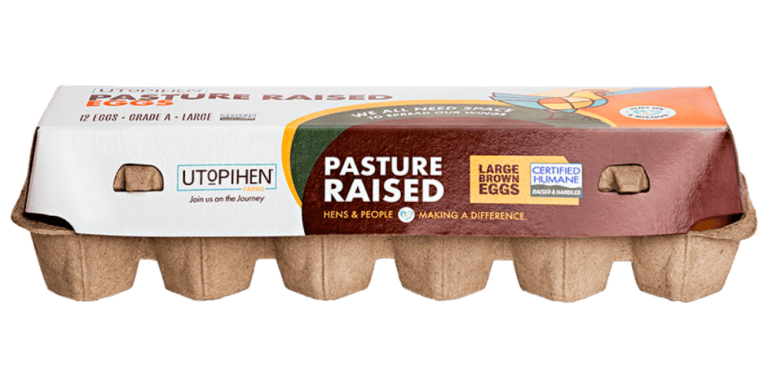
Pasture Raised Duck Eggs
Our Khaki Campbell ducks are raised on farms in and around Lancaster County with real outdoor access — open pasture for grazing, tall grass and brush for foraging, and trees for shade and shelter throughout the day.
They spend their days doing what ducks are supposed to do: wandering, foraging for plants and insects, and moving through open land at their own pace. Their supplemental feed is non-GMO. And when they’re done wandering, they have a safe barn to come back to.
That access to land is what shapes the egg. The natural foraging is a direct contributor to the richer yolk, the deeper flavor, and the higher omega-3 levels that duck eggs are known for. A duck raised on open pasture produces a meaningfully different egg than one raised in a confined system. You can taste and see the difference.
Pasture raised duck eggs are one of the more nutrient-dense foods you can add to your diet.
- Protein: 7 to 9 grams per egg. More than a chicken egg, coming from the larger whites.
- Omega-3s: Roughly 100mg per egg — nearly three times what you’ll find in a conventional chicken egg. Omega-3s are fat-soluble, so they concentrate in the yolk. A bigger yolk means more omega-3s.
- Fat-soluble vitamins: A, D, E, and K — all at higher levels than chicken eggs, again because of that larger yolk.
- Choline: More than chicken eggs. Most people are chronically short on choline, and it plays a real role in brain health, liver function, and fetal development.
- Calories: About 100 per egg, compared to 70 to 90 for a chicken egg. You’re getting more of everything, and the nutrition scales with it.
- Shelf life: Up to six weeks refrigerated. Duck eggshells are significantly thicker and harder than chicken eggshells, which keeps them fresher longer and means fewer end up wasted.
You Might Also Like ...
Behind the Egg
Khaki Campbells are a docile, sociable breed that moves through the world in large, coordinated flocks. They’re not big fliers; mostly, they waddle! They love shade, they love company, and they spend their days foraging and roaming at their own pace.
Our farms in the Lancaster County area give them the space to do exactly that. Wide open pasture, tall grass, natural brush, and trees for shade when the sun gets high. The result is an egg with a bigger, deeper yolk and a richness that’s hard to get any other way.
Most people who try them for the first time say the same thing: that’s just a really good egg.
How to Use Duck Eggs
Pasture raised duck eggs work in almost anything. Here’s where the difference is most noticeable:
- Baking: This is where most people become converts. The higher fat content in the yolk is what makes baked goods tender, moist, and rich in a way that’s hard to replicate with chicken eggs. If you only try duck eggs in one place, make it here.
- Custards, quiches, and hollandaise: The creamier set is immediately noticeable. Crème brûlée, quiche, lemon curd, hollandaise: all of it benefits from a bigger, richer yolk. The deeper color shows up too. Everything just looks better.
- Fresh pasta: Duck eggs make pasta dough silkier and more golden. If you make fresh egg pasta regularly, try swapping in duck eggs – it’s hard to go back to!
- Scrambled and fried: Simple preparations are where egg quality shows up most clearly. Scrambled with butter and a little salt, that’s all you need to taste the difference. The yolk is more present, the flavor is fuller, and the whites set a little firmer.
- Everyday cooking: Frittatas, shakshuka, egg salad, hard-boiled: duck eggs work wherever chicken eggs work. You’re just putting in a little more of everything.
The swap is 1:1 in almost any recipe. No adjustments needed. The one exception is anything that relies on stiffly whipped egg whites, like meringues or angel food cake. For those, stick with chicken eggs!
About That Shell
Duck eggshells are significantly thicker and harder than chicken eggshells. It’s one of those details that sounds minor until you think about what it actually means.
Thicker shells keep the egg fresher longer, up to six weeks refrigerated, compared to three to five weeks for chicken eggs. That means fewer eggs get thrown out at home before they’re used.
They also break less in shipping and handling, which means less waste before the egg even reaches you. Fewer cracked cartons pulled from shelves. Less lost between the farm and your refrigerator.
Food waste is something we think about seriously, not as a talking point but as a real problem we want to be part of solving. That ethos runs deep in Lancaster County farming, and it runs deep at Utopihen. The duck egg’s shell is one of the things we genuinely appreciate about them. It’s a small thing that adds up across a lot of eggs.
Duck Eggs vs. Chicken Eggs: How They Compare
Sometimes it helps to see it side by side.
| Pasture Raised Duck Eggs | Pasture Raised Chicken Eggs | |
| Protein | 7g to 9g | ~6g |
| Omega-3s | ~100mg | ~37mg |
| Calories | ~100 | ~70 to 90 |
| Yolk size | Larger | Smaller |
| Shell | Thicker, harder | Thinner |
| Shelf life | Up to 6 weeks | 3 to 5 weeks |
| Choline | Higher | Good source |
| Best for baking | Yes | Reliable, consistent |
| Best for meringues | Trickier | Ideal |
Neither egg is the wrong choice. Pasture raised chicken eggs are an excellent everyday egg at a more accessible price point. Pasture raised duck eggs are what you reach for when nutrition or richness matters more — when you’re baking something that deserves the extra yolk, or when you want more from the same meal.
A lot of kitchens end up keeping both. Different eggs for different days. It’s not complicated.
For a deeper look, read our full Duck Eggs vs. Chicken Eggs guide.
Who Reaches for Duck Eggs?
Pasture raised duck eggs aren’t for everyone all the time, but for certain kitchens and certain priorities, they’re hard to replace.
If you bake regularly, duck eggs are worth keeping on hand. The results speak for themselves, and most bakers who try them don’t go back to chicken eggs for anything that matters.
If you’re focused on protein, omega-3s, or overall nutrient density, duck eggs are one of the more efficient ways to get more of those things through real food rather than supplements. That makes them a natural fit for people eating keto or paleo, where food quality and nutrient density tend to matter more than convenience.
If you’re pregnant or breastfeeding, the higher choline content is worth paying attention to. Choline plays a significant role in fetal brain development, and most people aren’t getting enough of it through diet. Talk to your doctor, but duck eggs are a real food source of a nutrient a lot of people are short on.
And if you’ve just always been curious, that’s reason enough! Try them scrambled, simply, with butter and salt. Start there.
Duck Egg Questions, Answered
How do pasture raised duck eggs taste compared to chicken eggs?
Richer and creamier, but still recognizably an egg. The yolks are bigger and more flavorful, and the whites set a little firmer when cooked. Most people describe it as a more intense version of a chicken egg, not something foreign. The most common reaction from first-time duck egg eaters: That’s just a really good egg.
Can I substitute pasture raised duck eggs for chicken eggs in recipes?
Yes, 1:1 in almost any recipe with no adjustments needed. The one exception is anything that depends on stiffly whipped egg whites, like meringues or angel food cake. For everything else, pasture raised duck eggs work — and usually make the result better.
Are pasture raised duck eggs better for baking?
They’re widely considered the best eggs for most baking. The higher fat content in the yolk is what makes the difference: cakes rise higher, stay moist longer, and have a richer flavor. Custards set creamier. Pasta comes out silkier. If you bake regularly, this is the place to start with duck eggs.
How long do pasture raised duck eggs stay fresh?
Up to six weeks refrigerated, thanks to their thicker shells. Chicken eggs are generally best within three to five weeks of the pack date. Fewer end up wasted before you get to use them.
Are Utopihen pasture raised duck eggs non-GMO?
Yes. Our pasture raised ducks are raised on non-GMO supplemental feed, with no genetically modified ingredients, and forage naturally on pasture.
Where are these pasture raised blue eggs from?
In and around Lancaster County, Pennsylvania. One of the most established farming regions in the country, with a long tradition of doing things carefully and doing them right.