Pasture Raised Blue Eggs
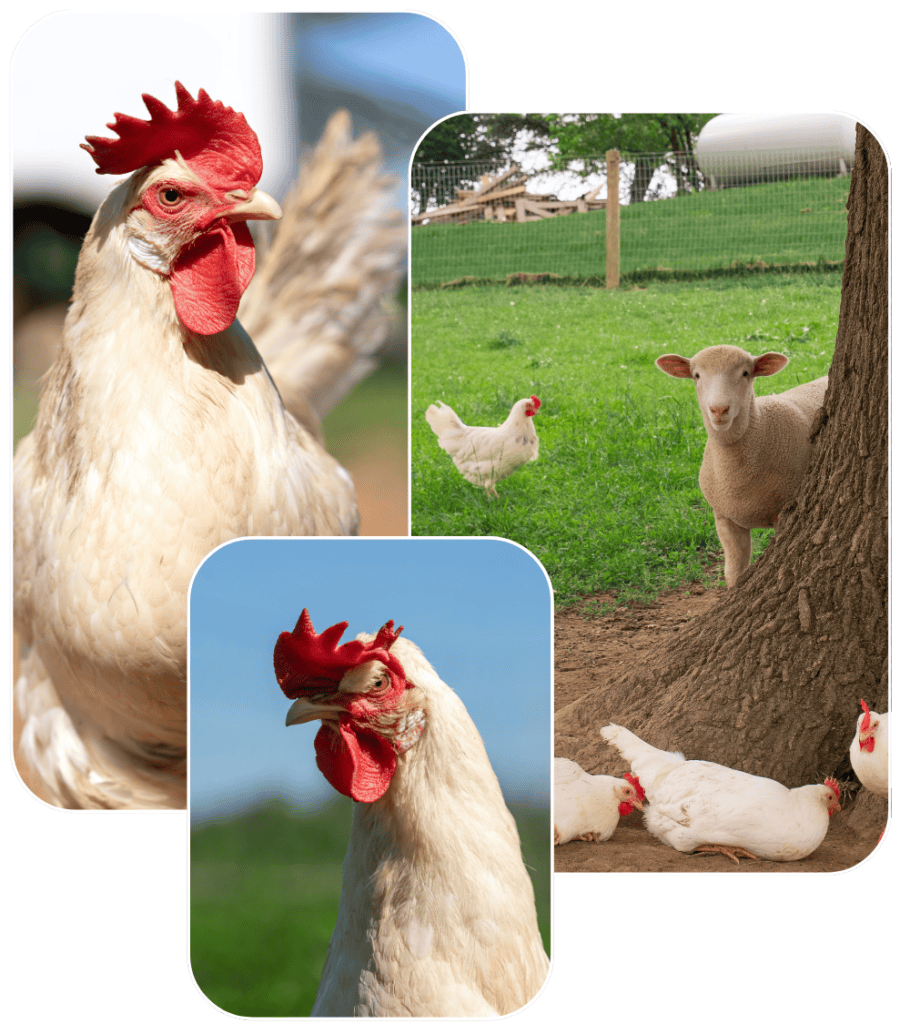
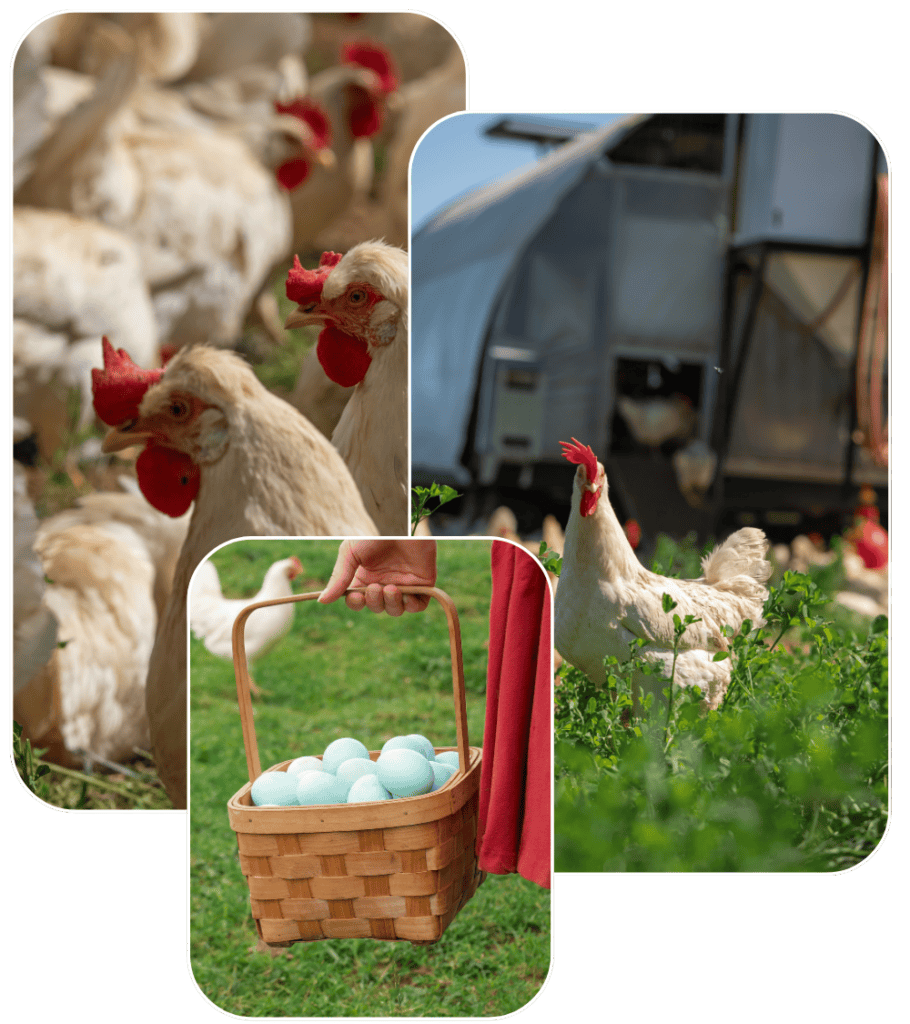
Our Azure Blue hens are raised on mobile coops that rotate to fresh pasture at regular intervals, so there’s always something new to forage. New grass, new ground, and new insects. That rotation matters — it’s what keeps the land healthy and keeps the hens doing what hens are built to do.
They get out on grass every day. The mobile coop system means they’re pasture raised and never sitting on the same worn patch of earth for weeks at a time. They move when the land tells them it’s time to move.
Their supplemental feed is non-GMO, with no genetically modified ingredients. And at the end of the day, they have a safe, covered coop to come back to.
That life on rotating pasture is what produces the deep golden yolk you’ll find inside every blue shell. The outside is the novelty. The inside is what we’re proud of.
Pasture Raised blue eggs deliver the same nutritional profile you’d expect from any hen raised on real land with genuine outdoor access.
- Protein: About 6 grams per egg. A complete protein, with all nine essential amino acids.
- Omega-3 fatty acids: Meaningfully higher than conventional eggs, thanks to the varied outdoor diet. Pasture raised hens that forage on real grass and insects produce eggs with more omega-3s than hens raised on grain alone.
- Fat-soluble vitamins: A, D, E, and K, all present at higher levels than in conventional eggs. These nutrients come largely from the varied outdoor diet and concentrate in the yolk.
- Choline: A good source. Choline supports brain health, liver function, and fetal development, and most people aren’t getting enough of it through diet.
- Lutein and zeaxanthin: These antioxidants, found mostly in the yolk, support long-term eye health. The deep golden color of the yolk is a direct indicator of their presence.
- Calories: Roughly 70 to 90 calories per egg, depending on size. A remarkable amount of nutrition for the calorie cost, which is part of why eggs have been a dietary staple across virtually every culture for as long as people have been eating.
The shell color is a breed trait, not a nutritional one. What matters is how the hen lives. Ours live well.
You Might Also Like ...
Behind the Egg
Azure Blues are a mixed breed, a cross between a Leghorn and an Americauna, and they bring something from both sides of that lineage. The Leghorn’s efficient, consistent laying. The Americauna’s distinctive blue-green egg.
They’re a smaller hen compared to most egg-laying breeds, and their eggs range from medium to large. They move in flocks, they forage readily, and they take well to the mobile coop system we use on our farms in the Lancaster County area.
Here’s something worth knowing: a chicken’s earlobe color tells you what color their eggs will be. The Azure Blue has a light blue-green earlobe. That blue shell isn’t dye, it isn’t a coating, and it isn’t a novelty for the sake of it. It’s just what this breed does.
Crack one open and the inside looks exactly like you’d expect from a pasture raised egg: a deep, golden yolk that stands up tall. The shell is the conversation starter. The yolk is the reason to keep buying them.
How to Use Blue Eggs
Pasture raised blue eggs cook exactly like any other pasture raised egg. They’re a 1:1 swap in any recipe, with no adjustments needed. What changes is the yolk.
- Everyday cooking. Scrambled, fried, poached: simple preparations are where pasture raised blue egg quality shows up most clearly. Scramble them with butter and a little salt. The yolk is deeper in color and richer in flavor than what you’ll find in a conventional egg. That’s what real pasture access does.
- Baking. The deeper golden yolk means better color in cakes, quick breads, and pastries. The flavor is fuller and more present. They work beautifully in anything that showcases the egg, custards, quiches, lemon curd, and hollandaise.
- Hard-boiled. The blue shell makes them genuinely striking on a plate or in a salad. Easter eggs aside, they’re just a good-looking hard-boiled egg.
- Entertaining. This is the honest one. A carton of blue eggs on a counter gets noticed. People ask about them. They’re a real, pasture raised egg with a story behind them — and they look like no other egg in the grocery aisle.
The quality is the same as any Utopihen egg. The difference is the shell.
What Makes the Shell Blue?
The blue color of a pasture raised blue egg comes from the breed, not from anything done to the egg after the fact.
Azure Blues are a cross between a Leghorn and an Americauna. The Americauna side of that lineage carries a genetic trait that deposits a pigment called oocyanin throughout the shell during egg formation. Unlike brown eggs, where pigment is applied only to the outside of the shell in the final stages of laying, blue eggshells are pigmented all the way through. If you look at a cracked blue eggshell, the inside is blue too.
The shell color does not affect flavor, nutrition, or how the egg cooks. What matters is how the hen lives. A blue egg from a hen on mobile pasture in and around Lancaster County is a fundamentally different food from a blue egg from a hen raised in a conventional system. The shell is just the starting point.
One easy way to know: look at the earlobe. A chicken’s earlobe color reliably predicts the color of its eggs. Azure Blues have a light blue-green earlobe. It’s a small detail, but it’s the kind of thing you remember.
Pasture Raised Blue Eggs vs. Conventional Eggs How They Compare
| Pasture Raised Blue Eggs | Conventional Eggs | |
| Shell color | Blue to blue-green | White or brown |
| Yolk color | Deep golden | Pale yellow |
| Omega-3s | Higher | Lower |
| Vitamins A, D, E | Higher | Lower |
| Hen’s outdoor access | Daily, rotating pasture | Minimal or none |
| Feed | Non-GMO | Conventional |
| Flavor | Richer, fuller | Mild, neutral |
| Protein | ~6g | ~6g |
| Calories | ~70 to 90 | ~70 to 90 |
The protein and calorie numbers are similar. The difference is everything else: how the hen lives, what she eats, and what that produces in the yolk. Pasture access isn’t a marketing term. It shows up in the egg.
Who Reaches for Pasture Raised Blue Eggs
Some people find them because they’re looking for something different. Some find them because they care about how their food is raised. A lot of people find them both ways at once.
If you care about pasture raised eggs and want something that stands out visually, pasture raised blue eggs are the straightforward answer. Same commitment to land access and non-GMO feed as every other Utopihen egg. Just a shell that gets people talking.
If you cook for other people, for family, for guests, for people you want to feed well, pasture raised blue eggs are the kind of ingredient that shows you put thought into it. They look deliberate. Because they are.
If you’re moving away from conventional eggs and want somewhere to start, this is a reasonable place. The flavor difference between a pasture raised egg and a conventional egg is real, and a deep golden yolk in a blue shell makes it easy to see that difference before you even take a bite.
And if you’ve seen them at a farmers market and always wondered: they taste like a really good egg. That’s the whole story.
Blue Egg Questions, Answered
What makes pasture raised blue eggs blue?
The blue shell comes from the breed. Azure Blues are a cross between a Leghorn and an Americauna, and the Americauna side carries a genetic trait that deposits blue pigment throughout the shell during egg formation. It’s not a dye or a coating. The inside of the shell is blue too. Shell color does not affect flavor or nutrition — it’s purely a breed characteristic.
Do pasture raised blue eggs taste different from white or brown eggs?
The shell color doesn’t change the flavor. What changes the flavor is how the hen lives. Pasture raised blue eggs taste richer and fuller than conventional eggs because the hens have real outdoor access and a varied diet — not because the shell is blue. Crack one open and you’ll see a deep golden yolk that looks and tastes different from what you’ll find in a standard grocery carton.
Are pasture raised blue eggs more nutritious than regular eggs?
The blue shell itself doesn’t add nutrition. What makes Utopihen blue eggs more nutritious than conventional eggs is the pasture raised farming system. Hens with genuine outdoor access and varied foraging produce eggs with more omega-3 fatty acids and higher levels of fat-soluble vitamins than conventionally raised hens. The farming is the variable, not the shell color.
What breed lays Utopihen pasture raised blue eggs?
Azure Blues, a cross between a Leghorn and an Americauna. They’re a smaller breed that lays medium to large eggs, takes well to mobile coop systems, and forages readily on open pasture. Their earlobe is a light blue-green, which is how you know the eggs will be blue before they’re even laid.
How are the hens raised?
On mobile coops that rotate to fresh pasture at regular intervals. They get outdoor access every day and always have fresh ground to forage. Their supplemental feed is non-GMO. They have a safe coop to return to at the end of the day. That rotating pasture system is what keeps the land healthy and the hens doing what hens are built to do.
Are Utopihen pasture raised blue eggs non-GMO?
Yes. The supplemental feed is non-GMO, with no genetically modified ingredients, alongside everything the hens forage naturally on rotating pasture.
Where are these eggs from?
In and around Lancaster County, Pennsylvania. The same farms, the same farming tradition, and the same standards as every other egg we raise.
Can I use pasture raised blue eggs the same way I use regular eggs?
Yes, exactly the same. They’re a 1:1 substitute in any recipe with no adjustments needed. The only difference you’ll notice is a richer yolk color and a slightly fuller flavor, both of which tend to make the result better.