Once you understand that process, from the hen’s reproductive cycle to how an egg gets collected, graded, and stored, a bunch of things start to click: why egg supply dips in winter, why no two eggs ever look quite the same, why some cartons say “cage free” and others say “pasture raised,” and why the way a hen is raised makes a real difference to what you’re eating for breakfast.
So let’s walk through it, starting with the biology.
The Hen Reproductive Cycle: How an Egg Actually Forms
A hen is born with every egg cell she’ll ever have. Her ovary holds thousands of tiny, undeveloped yolks, and once she matures, usually somewhere around 18 to 20 weeks old, her body starts releasing one at a time into a long, coiled tube called the oviduct. From that point, it takes about 24 to 26 hours for a single yolk to become a finished egg, which is a longer process than most people expect for something that looks so simple once it’s on the plate.
Along the way, it picks up layers in a pretty specific order:
| Stage | Time | What Happens |
| Ovulation | ~30 minutes after the previous egg is laid | A mature yolk is released into the oviduct. |
| Albumen Formation | ~3 hours | The egg white forms around the yolk. |
| Membrane Formation | Less than 1 hour | Inner and outer shell membranes develop. |
| Shell Formation | ~20 hours | Calcium carbonate hardens into the shell, and pigments are added if applicable. |
| Laying | Minutes | The completed egg is laid, and the cycle begins again. |
Because that cycle runs a little past 24 hours, most hens lay a bit later each day until the pattern resets, sometimes skipping a day entirely when the timing pushes into the evening, when a hen’s body prefers not to lay. It’s part of why a hen doesn’t lay like clockwork at the same hour every day, even though it can look that way from the outside.
What Determines Whether a Hen Lays Eggs?
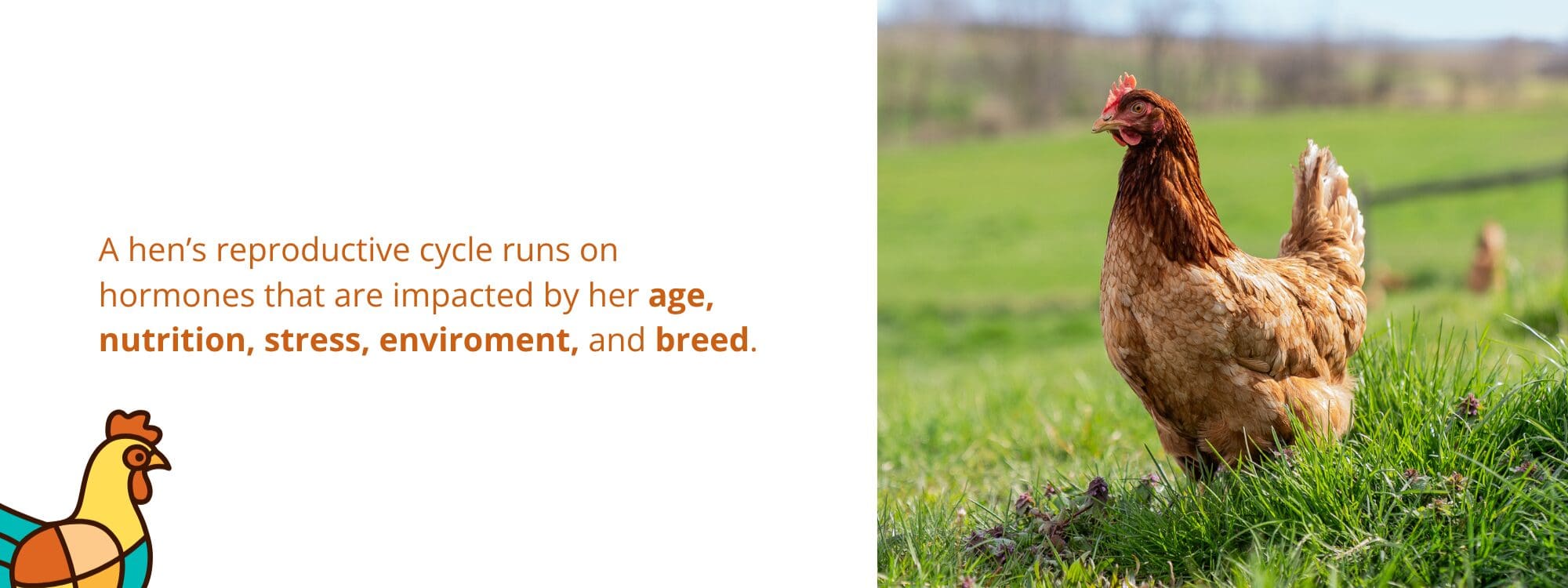
A hen’s reproductive cycle runs on hormones, and those hormones respond to what’s happening around her. A few things really drive whether, and how well, she lays.
Age. Hens usually start laying around five months old, hit their stride in the first year or two, and slowly taper off from there. The early years tend to be her most productive, often 250 to 300 eggs in that first year, depending on the breed, before production gradually eases with each passing year.
Nutrition. Turning out an egg every day or two takes a lot out of a hen, so her feed needs enough protein and calcium to keep pace and build a strong shell. A hen on poor feed doesn’t just lay less; the eggs she does lay tend to be lower quality too, with thinner shells and paler yolks. A hen laying at full tilt can use up nearly her entire day’s calcium intake on a single shell, which is why access to a well-balanced diet, not just more food, makes such a difference.
Stress and environment. Overcrowding, extreme heat or cold, illness, or even a sudden change in routine can throw a hen off. Hens that have room to move around, forage, and just act like hens tend to lay more consistently over time, which is a big reason pasture access and lower stocking density matter so much on humane farms. Even something as simple as a loud noise or a new bird introduced to the flock can cause a short dip in laying while a hen settles back into her routine.
Breed. Some breeds, like the Hy-Line Brown, were basically bred for high, steady output. Others, especially heritage or ornamental breeds, lay less often but bring other qualities to the table, such as unusual shell colors or stronger foraging instincts. The Azur, for example, is known for its soft blue eggs, while a Khaki Campbell duck lays richer, larger eggs prized by bakers.
The Role of Daylight in Egg Production
Of all the factors that shape how eggs are produced, daylight might be the single biggest one. A hen’s reproductive system is wired to light. Her body uses the amount of daylight she’s exposed to as the trigger that keeps her hormones and her laying running on schedule. Most hens need somewhere around 14 to 16 hours of light a day to keep laying at a steady clip.

That single mechanism explains a lot of what looks like unpredictable behavior in a flock. It’s the main reason chickens lay fewer eggs in winter: shorter days simply don’t give a hen’s body enough of a signal to maintain full production.
It’s also why commercial operations sometimes use artificial lighting indoors to keep egg output steady through the darker months, stretching a hen’s perceived daylight with bulbs on a timer. That approach can keep the numbers consistent year-round, but it’s a very different experience for the hen than following her natural seasonal rhythm outdoors.
For farms that don’t rely on artificial lighting, daylight becomes one of the clearest seasonal signals in the whole operation, and it ties directly into the next piece of the puzzle: how production actually shifts across the year.
Seasonal Egg Production
Egg production isn’t a flat, constant number. It rises and falls across the year, largely in step with daylight, temperature, and a hen’s own internal cycle.
Spring and summer, when daylight hours are longest, tend to be peak laying season. As days shorten heading into fall and winter, laying naturally slows, sometimes dramatically, for hens without supplemental light. Layer on top of that a hen’s annual molt, usually in the fall, when she sheds and regrows her feathers. Laying typically pauses or drops way down during a molt since her body is putting its energy into new feathers instead of eggs.
Within any given season, hens also lay in what’s called a clutch: a run of consecutive laying days followed by a day or more off before the pattern starts again. Since each egg takes over 24 hours to form, a hen physically can’t lay every single day without exception. A hen in her prime might lay five or six days out of seven, and clutch length itself can shift with the season, tightening up during peak daylight months and loosening as light fades.
Zoom out across a hen’s whole life, and the same seasonal logic applies on a longer timeline. Production peaks in her first year or two and eases gradually after that, though many hens keep laying, just less often, for years past their prime. If you want the full picture on that timeline, we’ve got a dedicated guide on how long hens lay eggs across their lifespan.
Why Eggs Aren’t All Identical
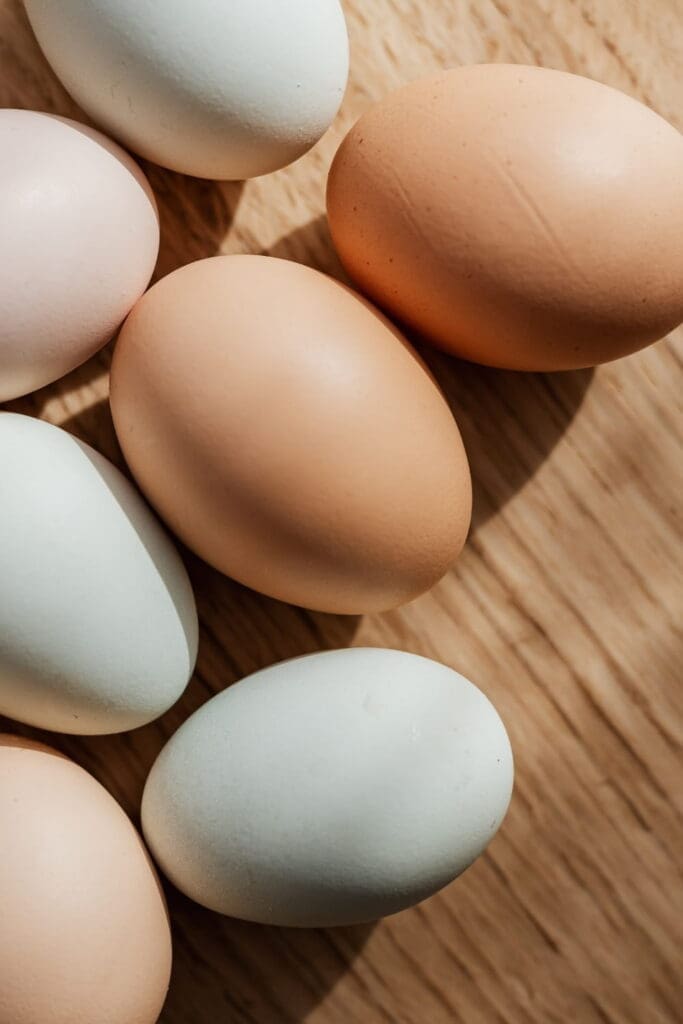
Even in a healthy, well-managed flock, no two eggs come out exactly alike. Shell color is pure genetics. Brown, white, even blue shells all trace back to breed, not diet, no matter what you might have heard. Yolk color is a different story, though. That one really is about what a hen eats, and hens with access to fresh pasture, grasses, and bugs tend to produce eggs with deeper, richer yolks than hens on a grain-only diet. Egg size shifts, too, usually increasing as a hen ages, which is why younger hens tend to lay smaller eggs even though the shell and yolk formation processes are identical.
Every so often, a hen’s system throws a curveball. One of the most common questions people ask is what causes double-yolk eggs, and the short answer is that it usually happens when a hen releases two yolks close together, and both end up wrapped in the same shell. It’s most common in younger hens whose laying cycles haven’t fully settled in yet, and while it’s a fun surprise in the carton, it’s a completely normal part of how eggs are produced.
Egg Collection & Grading
Once an egg is laid, the process is far from over. How eggs are collected and graded has just as much of an effect on what ends up in your carton as anything that happens inside the hen.
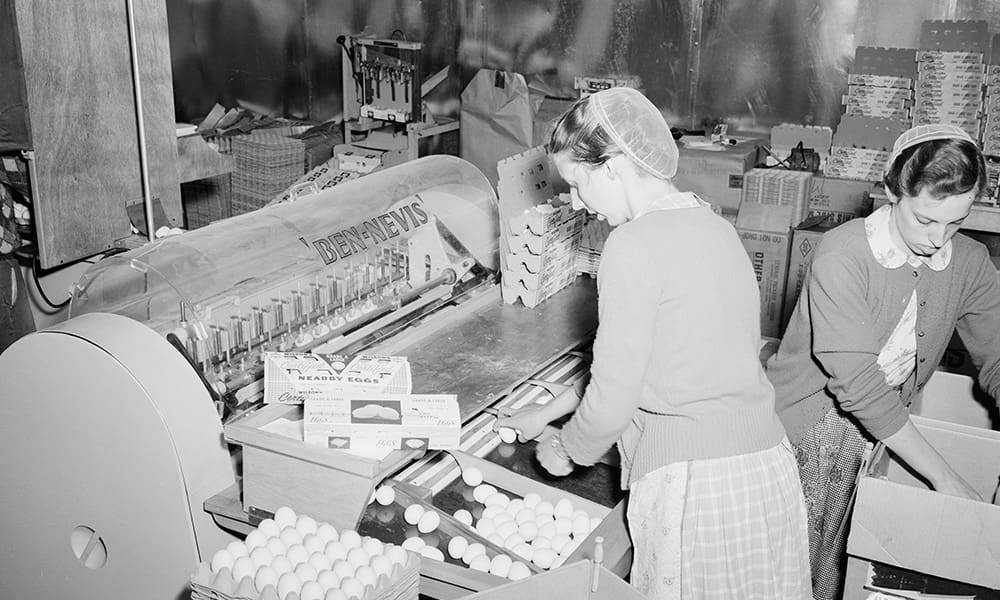
On a well-run farm, eggs are collected multiple times a day, both to keep them clean and to move them out of the nesting area before temperature swings or accidental damage become a risk. Frequent collection also matters for freshness. An egg that sits too long before it’s gathered and cooled starts to lose quality faster than one that’s collected promptly and moved into cold storage.
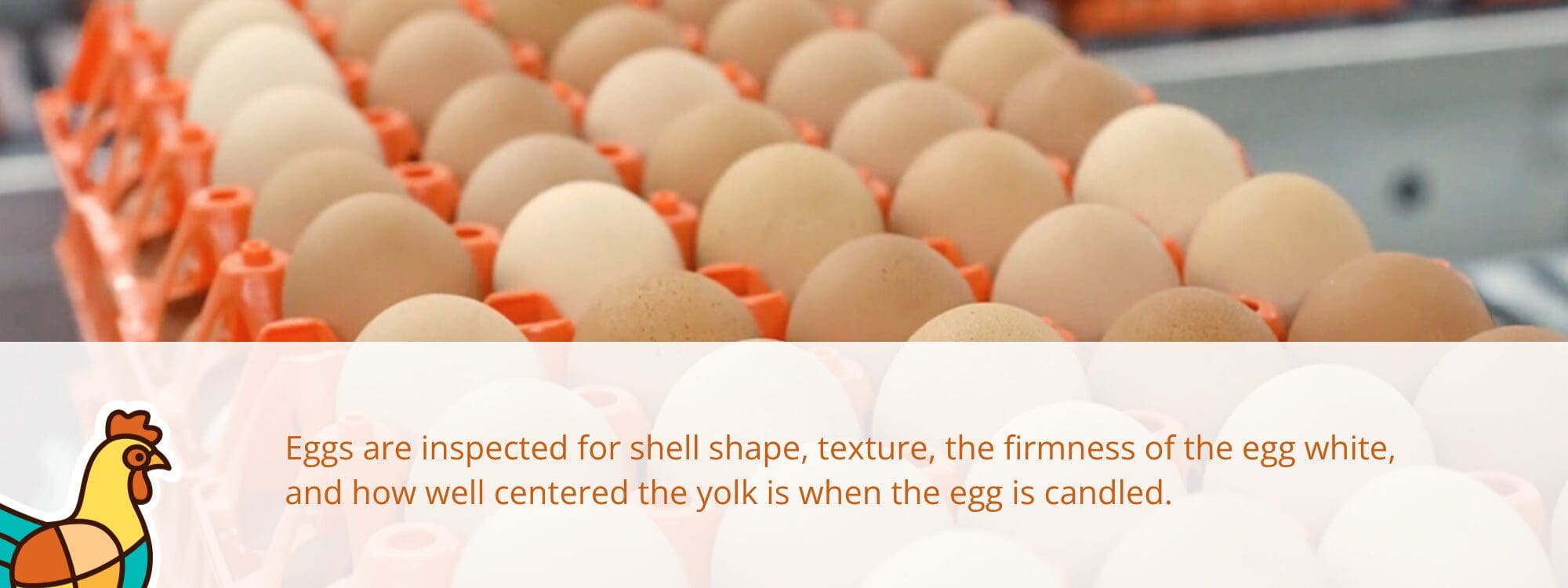
From there, eggs go through grading, which has nothing to do with how the hen was raised and everything to do with the egg’s physical quality. Inspectors, or automated scanning equipment on larger operations, check things like shell shape and texture, the firmness of the white, and how well centered the yolk is when the egg is candled, meaning held up to a light source.
-
- Grade AA eggs have the thickest whites and the roundest, most well-centered yolks.
-
- Grade A, the grade most commonly found in stores, is still high quality, but the white spreads out a bit more when cracked.
-
- Grade B eggs, which rarely make it to grocery shelves, tend to have thinner whites and are usually sold to food manufacturers instead.
Size is graded separately, based purely on weight per dozen, which is where labels like Peewee, Small, Medium, Large, Extra Large, and Jumbo come from. A dozen Large eggs has to weigh at least 24 ounces, while a dozen Jumbo eggs has to weigh at least 30 ounces.
Since egg size tends to increase as a hen ages, a flock of younger hens usually produces more Medium and Large eggs, while an established flock tends toward Large and Extra Large.
None of this tells you anything about how the hen was raised, which is why grading and sizing are worth setting aside in favor of the language on the carton that actually describes the farming method.
Packaging & Storage Best Practices
After grading, how an egg is packaged and stored has a real impact on how long it stays fresh and safe to eat.
In the United States, eggs are washed and sanitized before they’re packed, which removes the natural protective coating on the shell known as the bloom. Because that coating is gone, USDA guidelines require U.S. eggs to be refrigerated at or below 40°F from the farm to your kitchen, and cartons are typically labeled with a pack date and a sell-by or expiration date to help track freshness.
A few packaging and storage habits make a real difference:
-
- Keep eggs in their original carton. Cartons protect eggs from absorbing odors and flavors from other foods in the fridge, and they help retain moisture through the shell’s pores.
-
- Store eggs in the main body of the fridge, not the door. The door is exposed to greater temperature fluctuations each time it opens, while the interior remains consistently cold.
-
- Keep eggs pointed large end up. This keeps the air cell at the top, which helps maintain egg quality and keeps the yolk properly centered.
-
- Avoid washing eggs again at home if they’ve already been through the commercial washing and sanitizing process, since it isn’t necessary and can actually introduce more risk than it prevents.
Properly stored, refrigerated eggs generally stay fresh for three to five weeks past their pack date, which is longer than most people expect.
Can Farm Fresh Eggs Stay on the Counter?
This is one of the most common questions people run into once they start buying eggs directly from a farm instead of a grocery store, and the honest answer is that it depends on whether the eggs have been washed.
In the U.S., commercially sold eggs are washed before they reach the shelf, which strips away the bloom, that natural protective coating a hen puts on the shell as she lays. Once that coating is gone, refrigeration isn’t optional. It’s what keeps bacteria from working their way through the now-unprotected shell.
Unwashed, farm-fresh eggs are a different story. With the bloom still intact, the shell is naturally sealed against air and bacteria, which is why many backyard keepers and small farms in the U.S. and most of Europe, as standard practice, keep freshly laid, unwashed eggs safely at room temperature on the counter for a week or two. That said, once an egg has been refrigerated, even if it was never washed, it should stay refrigerated. Moving a cold egg back to room temperature can cause condensation to form on the shell, which undoes the bloom’s protection and creates the exact conditions bacteria need to get in.

The safest rule of thumb: if you’re not sure whether an egg has been washed, refrigerate it. If you know it’s straight from the farm with the bloom intact, and it’s never been chilled, the counter is perfectly fine for a short stretch.
Conventional, Cage-Free, Free-Range, and Pasture Raised: What the Labels Actually Mean
The label on an egg carton can say a lot, or surprisingly little, depending on the term.
Conventional eggs typically come from hens housed in cages indoors, with little to no outdoor access. This is still the most common method of egg production because it’s efficient and produces eggs at a lower cost.
Cage-free means hens aren’t kept in cages, but they’re often still housed indoors in large barns with limited or no outdoor access. It’s a step up in terms of hen mobility, but it doesn’t guarantee fresh air or pasture time.
Free-range goes a bit further, requiring that hens have some access to the outdoors. But the amount of space and time outside can vary a lot from one farm to the next, and “access” doesn’t always mean hens are actually out on green pasture.
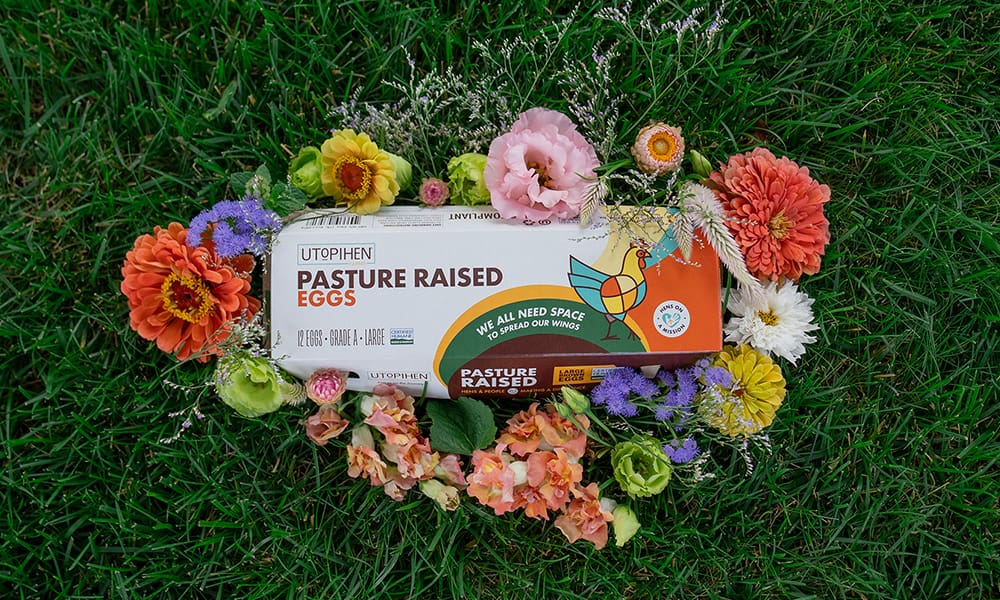
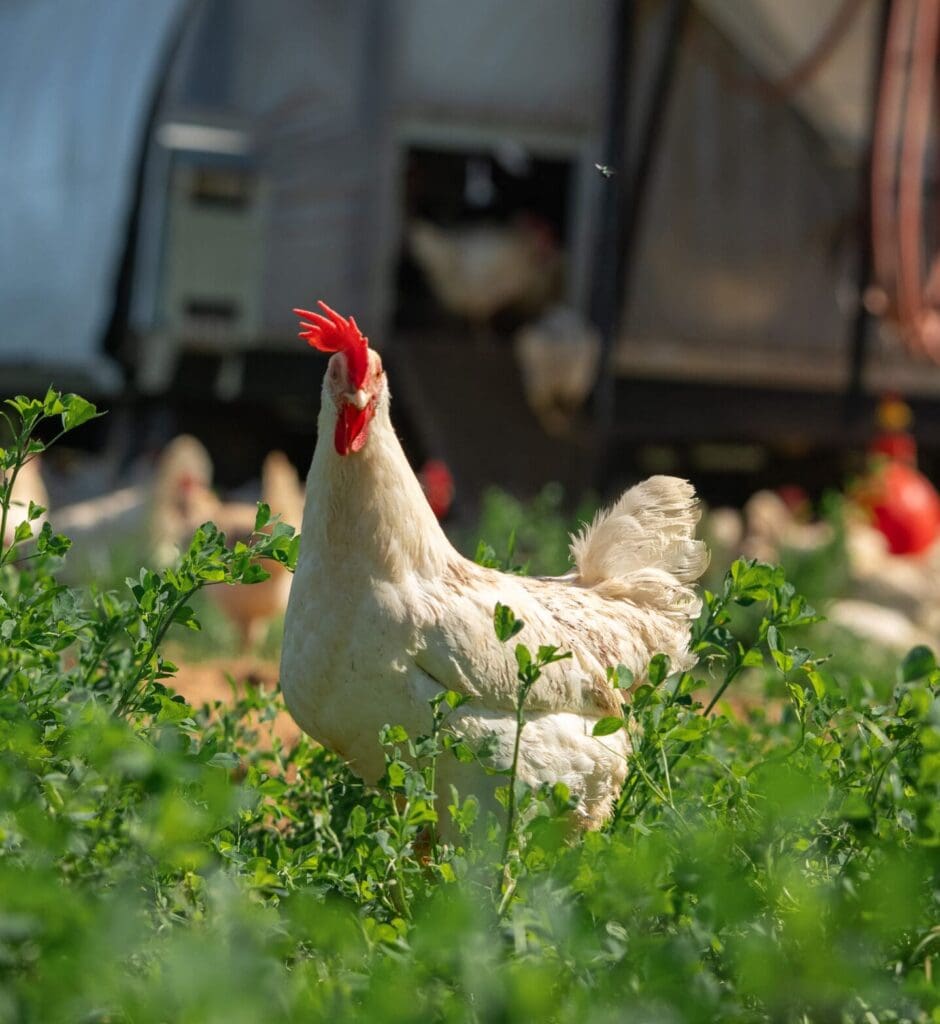
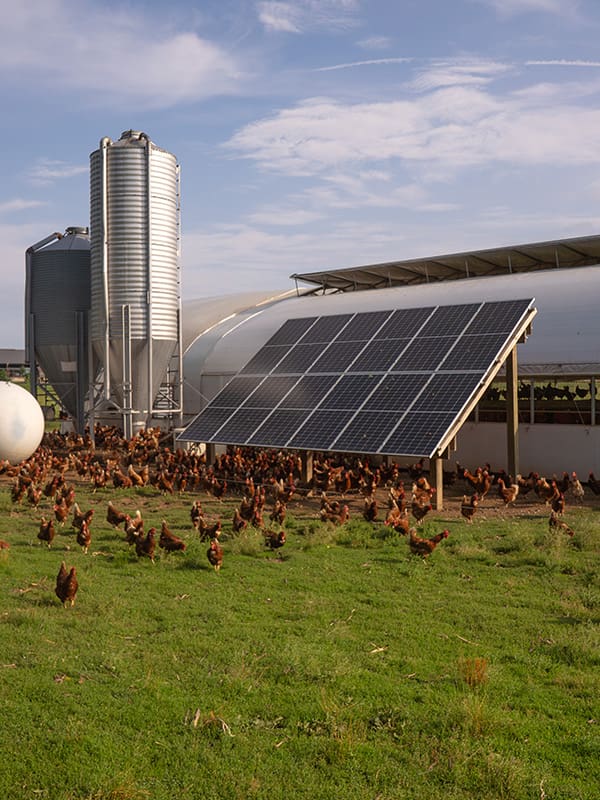
Pasture raised is the most robust of these terms, and the one with the most real substance behind it. Pasture raised hens spend significant time outdoors on actual grassy pasture, foraging for grasses, seeds, and insects in addition to their feed. This is where space per bird really starts to matter. At Utopihen, for example, hens get 110 square feet of pasture each, well beyond industry norms, giving them real room to roam, forage, and behave the way hens naturally would.
The difference between these methods isn’t just a welfare story, either. It shows up in the egg itself, in yolk color, in flavor, and in the nutritional differences mentioned earlier, like higher omega-3s and vitamin D in eggs from hens with real pasture access.

Why How a Hen Is Raised Changes the Outcome
Biology sets the baseline, but a hen’s living conditions decide whether she actually reaches her potential. Hens with room to roam, real daylight, and a varied, quality diet tend to be healthier, plain and simple, and healthier hens lay more consistently and produce richer, more nutrient-dense eggs.
That’s really the whole idea behind pasture raised farming. Give hens plenty of outdoor space, natural forage, and a well-thought-out diet instead of packing them indoors on the same uniform feed day after day. It doesn’t rewrite the biology of how an egg forms, but it changes the quality of everything along the way, better for the hen, and a better egg for you.
Frequently Asked Questions
1. How are eggs produced, from the hen to the carton?
An egg forms inside a hen over about 24 to 26 hours, moving through her reproductive tract as a yolk gets coated in white, wrapped in membranes, and sealed inside a shell. Once laid, it’s collected, graded for quality and size, washed, packaged, and refrigerated before reaching a store shelf.
2. What triggers a hen’s reproductive cycle to start?
A hen typically begins laying once she reaches sexual maturity, usually around 18 to 20 weeks old. From there, her cycle is driven mainly by hormone activity tied to daylight exposure.
3. How many eggs does a hen lay in a year?
It depends a lot on breed, age, and living conditions, but a healthy hen in her first year or two can lay somewhere between 250 and 300 eggs. That number drops as she gets older or if daylight, nutrition, or stress levels aren’t where they should be.
4. Do hens need a rooster to lay eggs?
No, hens don’t need a rooster to lay eggs. They lay on their own regardless of whether a rooster is around. A rooster is only needed if you want those eggs to be fertilized and hatch into chicks.
5. Why did my hen suddenly stop laying?
A sudden stop usually points to one of a few things: shorter daylight hours, molting, stress from a change in environment, illness, or simply age. Most healthy hens pick back up once the underlying cause resolves.
6. Can farm-fresh eggs stay on the counter?
Unwashed farm-fresh eggs can stay on the counter for a week or two, since the natural bloom coating keeps bacteria out. Washed eggs, including anything bought at a U.S. grocery store, should always be refrigerated, since washing removes that protective layer.
7. What does “Grade A” actually mean on a carton?
Grading measures physical quality, things like shell condition, white firmness, and yolk position, not how the hen was raised or how nutritious the egg is. Grade AA and Grade A are both high quality, with AA having slightly firmer whites and more centered yolks.
8. Is pasture raised the same thing as organic?
Not necessarily. Pasture raised describes how much outdoor space and forage access a hen has, while organic refers to the hen’s feed meeting USDA organic standards. An egg can be pasture raised without being organic, or organic without significant pasture access, though some farms, like Utopihen, offer eggs that are both.
9. Why do some eggs have a blood spot in the yolk?
A blood spot happens when a small blood vessel ruptures during the egg’s formation, usually around ovulation. It’s a normal, harmless occurrence and doesn’t mean anything is wrong with the egg.
The Bottom Line
Understanding how eggs are produced helps explain everything from seasonal laying patterns to why fresh eggs vary in size, color, and quality.
How eggs are produced comes down to a precise, well-timed process inside the hen, shaped just as much by daylight, season, and care as by biology itself.
Once you understand the full picture, from the hen’s reproductive cycle to the question of whether a fresh egg needs the fridge, the little details, like a slow week in winter or an occasional double yolk, stop looking like oddities and start looking like exactly what they are: the natural rhythm of how eggs actually get made.
Key Takeaways:
-
- How eggs are produced comes down to a precise, roughly 24-to-26-hour cycle inside the hen, driven largely by daylight, age, and nutrition.
-
- Egg production shifts with the seasons, since a hen’s laying is directly tied to daylight hours, molting, and her own internal clutch cycle.
-
- What happens after laying, collection, grading, and proper storage matters just as much as the biology, and determines whether a fresh egg needs refrigeration or can safely sit on the counter.
Eggs are produced through a natural reproductive cycle that takes approximately 24 to 26 hours. During this process, a hen releases a yolk that moves through the oviduct, where the egg white, membranes, and shell form before the egg is laid. Daylight, nutrition, age, and overall health all influence how often a hen lays eggs.
Crack open a carton, and it’s easy to take what’s inside for granted. But the process by which eggs are produced is actually much more involved than most people realize.
A hen’s age, her hormones, how much daylight she’s getting, and what she’s eating all play into whether she lays, how often, and what kind of egg comes out.