

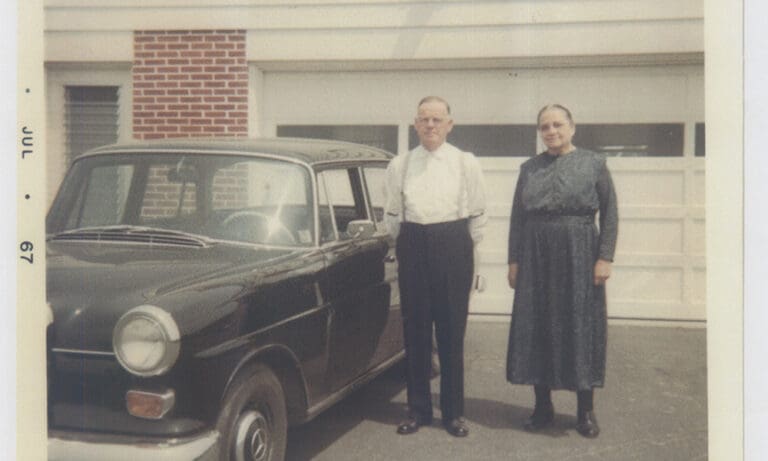
Westfield Egg Farm was started by George Weaver Sr. in Lancaster County, Pennsylvania. The family owned a small farm where they raised both chickens and dairy cows. Their little farm thrived and they sold eggs to the surrounding area.
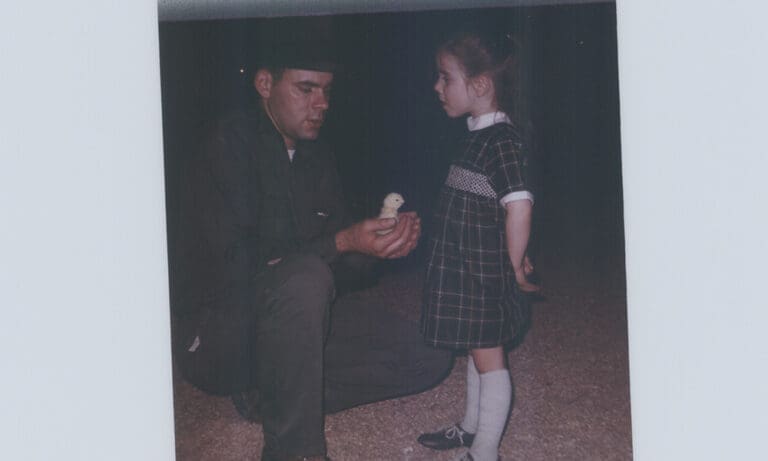
At this time in the food industry, eggs were controversial because of the claim that they contained high cholesterol levels. George Weaver Jr., along with a scientist named John Albright, decided to figure out a way to lower the cholesterol levels in eggs. They discovered that altering the hens’ diet and lighting schedule reduced cholesterol in eggs by 25%. The FDA first challenged the claim, but then validated it, raising the threshold for what could be considered “reduced cholesterol.”
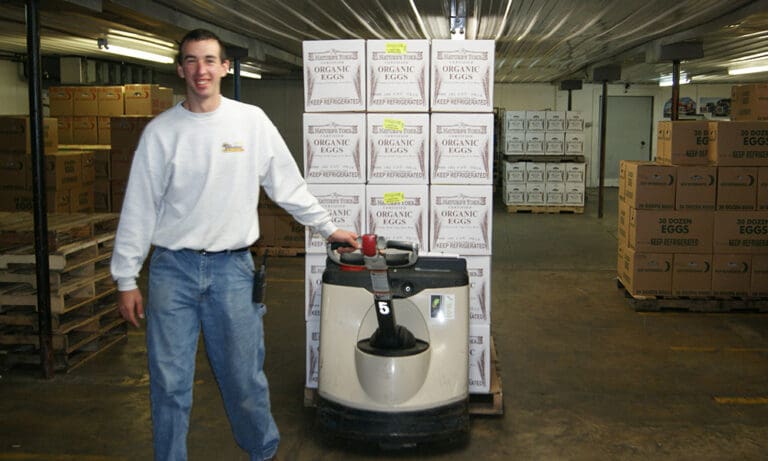
The brand, Nature’s Yoke, was trademarked and Westfield Egg Farm had full ownership of it. The family provided private-label packing, expanded distribution, and built retail relationships that were marked by remarkable hospitality. Their approach was simple yet profound: they offered to take back anything that didn’t sell. The business took off and Nature's Yoke became our legacy brand.
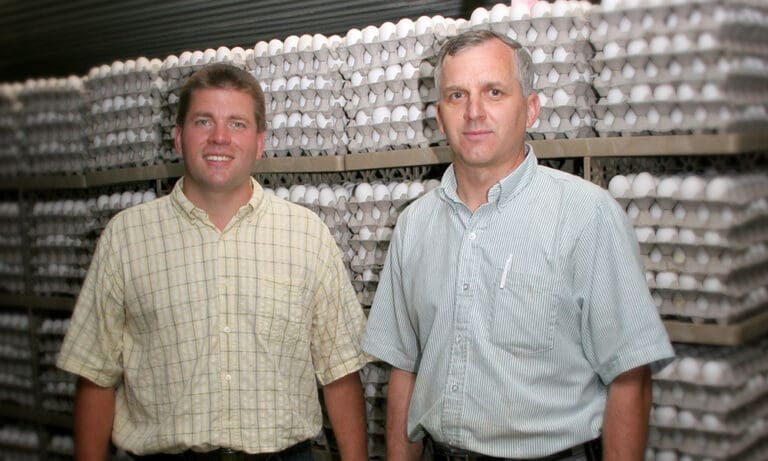
George Weaver III had an innovative idea to take the concept of “small family farms” to a whole new level. He began connecting with local farmers who had very small flocks (1,000–1,200 birds), and launched his first line of pasture raised eggs. At this point, Certified Humane didn’t have a standard for hen welfare and George III pushed for higher standards for the ethical treatment of birds.
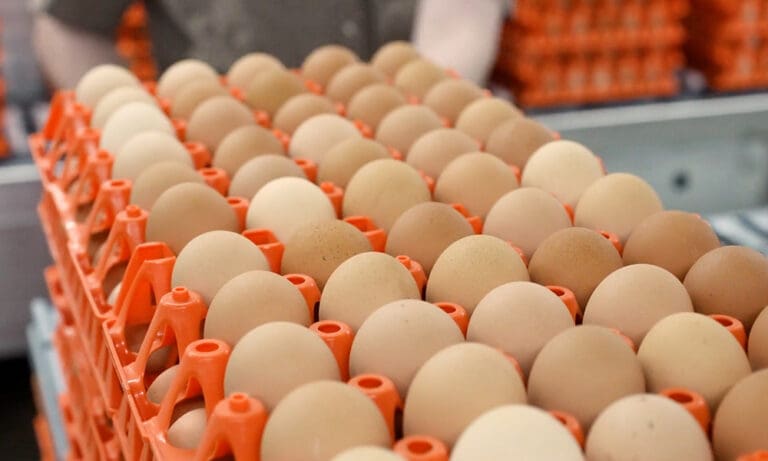
Soy-Free eggs started to become something consumers were asking us to launch and we answered. The item was very niche and had a significantly low volume. In the beginning, we only had 1–2 farms on this program. Even with the challenge, we were committed to addressing a need that has now grown larger than we could have imagined.
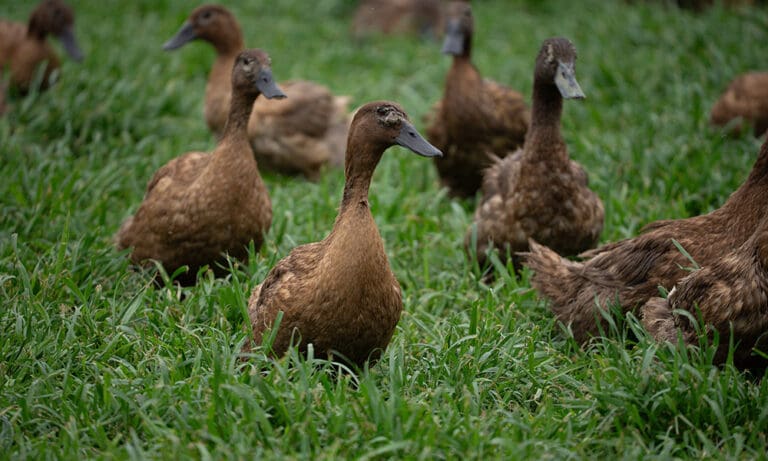
We were approached by our friends at MOM’s Organic Market who asked if we would consider a non-GMO duck egg, something we had never done before. We believed in raising chickens to a higher standard, so why not try ducks? We quickly learned that ducks are incredibly hard to raise and require farmers with exceptional skill in caring for and raising ducks.
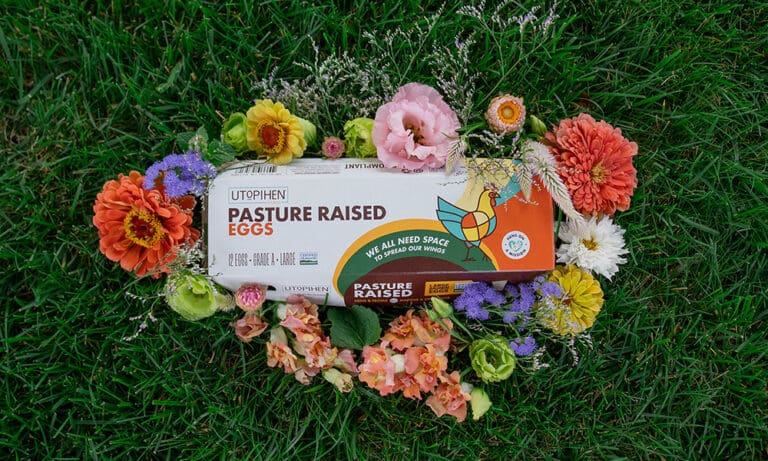
It became clear to our family that it was confusing to have both Free-Range and Pasture Raised eggs in the same brand, so we set out to find the perfect names for our pasture raised eggs. After many conversations, we landed on Utopihen Farms: Join us on the journey. Every word and phrase was intentionally chosen with the goal of reflecting our unique operating approach and inviting the consumer into the journey.
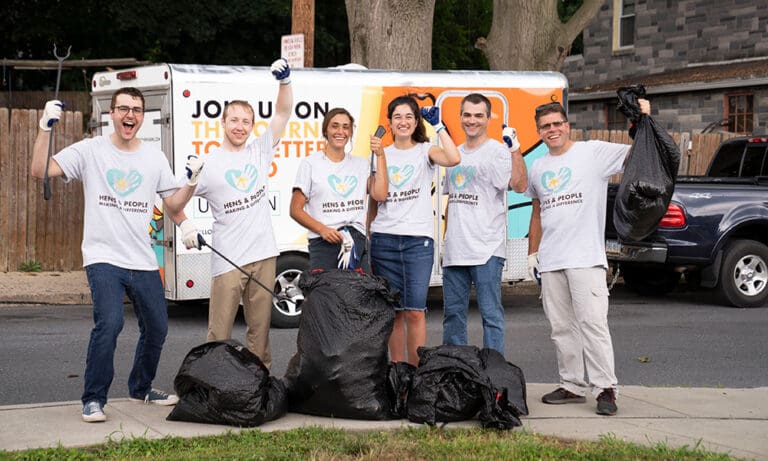
In alignment with Utopihen’s value of having a positive impact on the environment, we led a tree planting day on our Pasture Raised farms as well as a trash cleanup day in a local city. The heart of our brand from the start has been hens and people working together to build a more sustainable future.
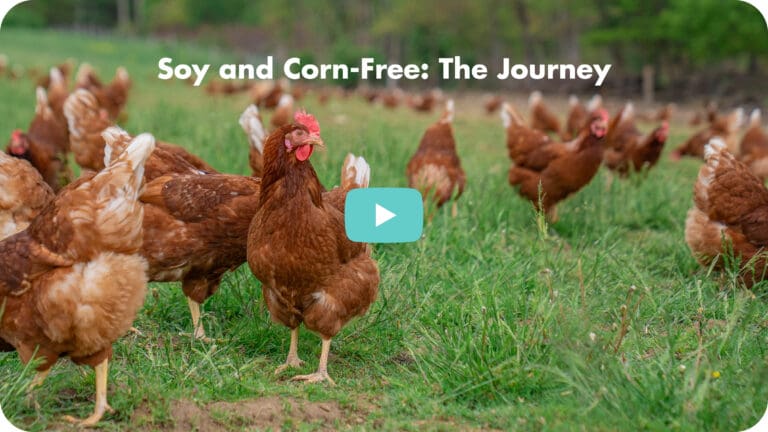
Many consumers expressed their interest in an egg that did not contain corn. The technical challenge of producing an egg without corn and soy was real. But in April, we launched our Soy and Corn-Free eggs, with the goal of offering quality eggs to those seeking a corn-free egg option.
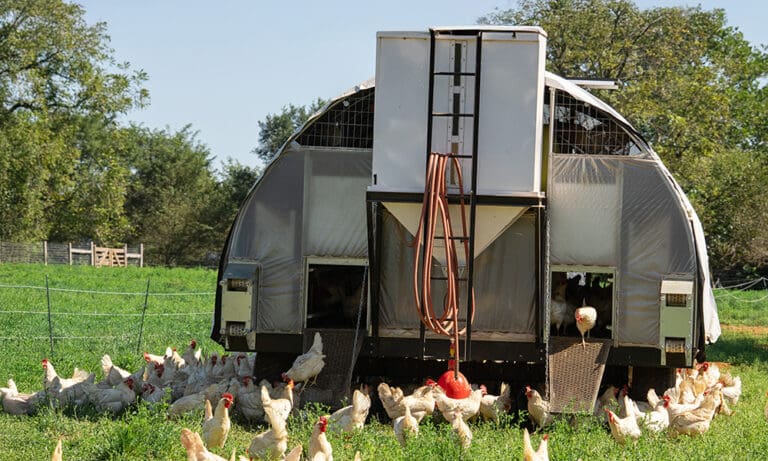
We launched 12–count Pasture Raised Duck Eggs for club stores and contracted our very first Pasture Raised Mobile Coop flock of beautiful, white, Azure Blue heirloom chickens. These hens are given fresh grass to forage and produce stunning blue eggs.
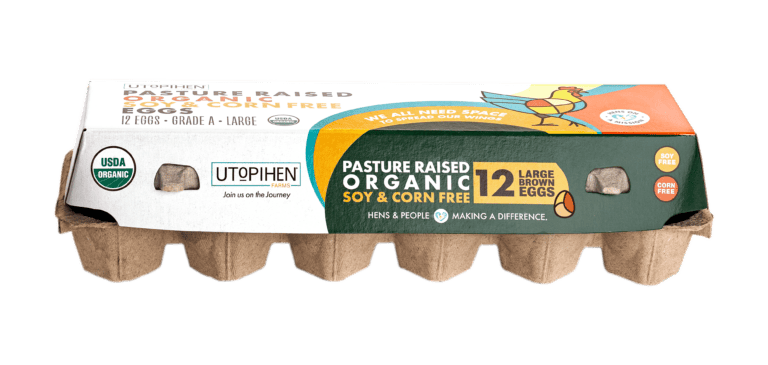
Many people asked us why our Pasture Raised Soy and Corn-Free Eggs weren’t organic. The answer was that creating an organic feed without soy and corn, that also met organic certification requirements, was a daunting challenge. But we decided to take it on. After years of research and continued development, we launched our Organic Pasture Raised Soy and Corn-Free eggs.


