
egg-icon-edited
CertifiedHumane_RGB_compress_transparent_v2
UF_non-GMOLogo_CMYK_compressed_transparent_v2

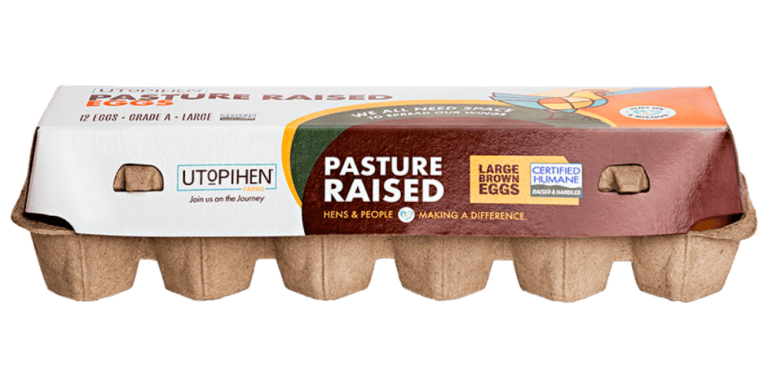
Pasture Raised Eggs

Raised on small family farms in the Lancaster County area. Real outdoor access, deep golden yolks, and a hen that actually gets to live like a hen.
Pasture Access

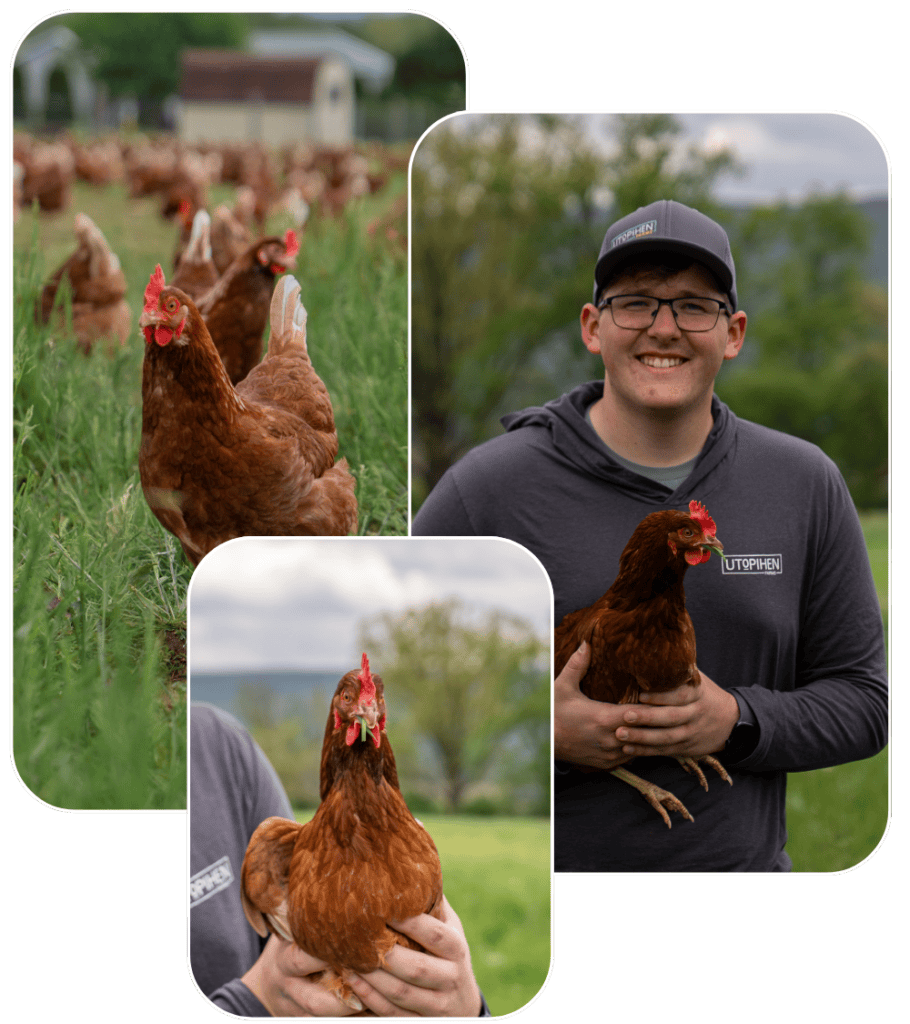
Our Pasture Raised hens live on small family farms in and around Lancaster County with genuine outdoor access every single day. They’re let out of their barns every morning and called back before dark. In between, they have 110 square feet of pasture per hen to roam, forage, and do what hens are built to do.

That’s not a small door at the back of a barn that technically counts as outdoor access. It’s real land. Wide open pasture with fresh grass, brush areas with tall grass and natural plants, and trees that give the hens shade and a sense of having somewhere to go. Our farms are genuinely varied landscapes, not uniform fields, and that variety is part of what makes them good places for hens to live.

Their supplemental feed is formulated for their health across every season. And everything about the way we farm is third-party verified by Certified Humane, an independent organization that inspects our farms and holds us to standards most producers never meet.

The hen’s life shows up in the egg. That’s the whole point of doing it this way.

Nutrition

A well-raised Pasture Raised egg is one of the most nutritionally efficient foods you can eat. Here’s what’s in ours:

  • Protein: About 6 grams per egg. A complete protein, with all nine essential amino acids.
  • Omega-3 fatty acids: Meaningfully higher than conventional eggs, thanks to the varied outdoor diet. Hens that forage on real grass and insects produce eggs with more Omega-3s than hens raised on grain alone. The Penn State College of Agricultural Studies found that eggs from pastured hens are measurably more nutritious than their conventional counterparts.
  • Vitamin D: Higher than in conventional eggs. Pasture raised hens spend their days in actual sunlight, and that shows up in the egg.
  • Fat-soluble vitamins: A, D, E, and K, all at higher levels than conventional eggs, concentrated in the yolk and coming largely from the varied outdoor diet.
  • Choline: A good source. Choline supports brain health, liver function, and fetal development, and most people are chronically short on it.
  • Lutein and zeaxanthin: Antioxidants found in the yolk that support long-term eye health. The deep golden color of the yolk is a direct indicator of their presence.
  • Calories: Roughly 70 to 90 per egg, depending on size. A remarkable amount of nutrition for the calorie cost.
  • Cortisol: Lower than conventionally raised eggs. Hens with genuine outdoor access and room to move produce eggs with lower levels of the stress hormone cortisol. Less stress in the hen means a cleaner egg.
You Might Also Like ...
PIN@4x with outline
Products Near Me

Find Utopihen eggs at local markets and stores near you.

Behind the Egg

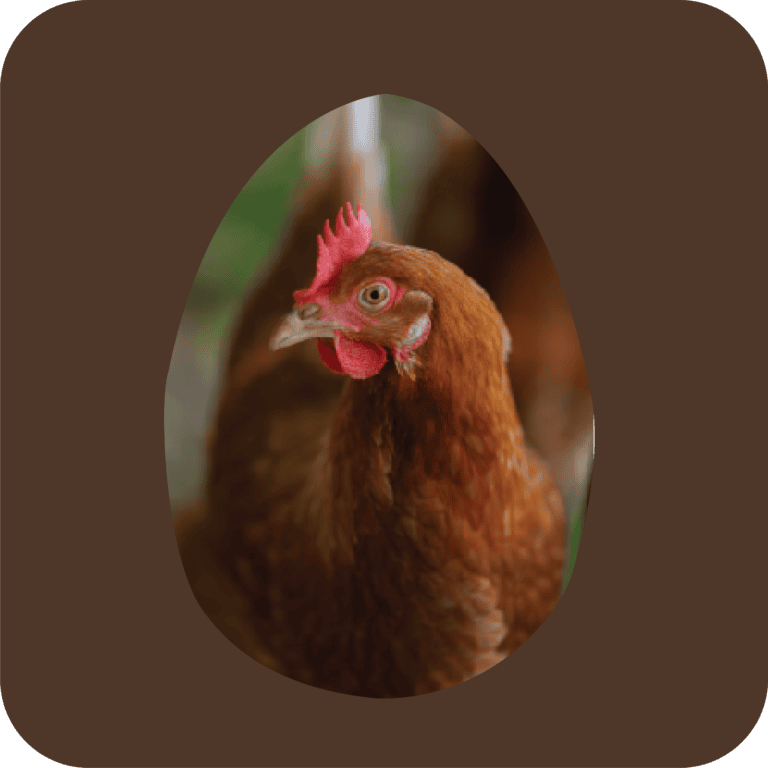
Most of our Pasture Raised hens are Hy-Line Browns, a sturdy, docile mixed breed that lays consistently high quality brown eggs. They’re a friendly bird, calm around people, and well-suited to the kind of farm life we provide: open pasture, varied terrain, and real space to move on 110 square feet of land.

They spend their days foraging through grass and brush, socializing, and moving at their own pace through the landscape. Our farms have wide open pasture, areas of tall grass and natural plants, and trees for shade and perching. It genuinely looks like the wild, with the added comfort of a safe barn when they’re ready to come back.

That life, and the variety it provides, is what produces the deep golden yolk you’ll find in every carton. The difference between a hen that actually lives outdoors and one that doesn’t shows up clearly in the egg. Deeper color, richer flavor, better nutrition. Every time.

egg chicken

What Pasture Raised Actually Means

The egg case is full of terms that sound similar but mean very different things. Cage-free. Free-range. Pasture raised. They’re not interchangeable, and the differences matter more than most labels let on.

  • Cage-free means hens are not in cages. It does not mean they go outside. Most cage-free hens never see daylight. They live indoors in significantly smaller spaces, often crowded, with no access to the outdoor life that shapes a genuinely good egg.
  • Free-range means hens have some access to the outdoors. But that access can be as little as two square feet per hen, and there’s no requirement for what that outdoor space looks like or how often hens actually use it. On many free-range farms, the outdoor area is a small concrete pad or a strip of gravel.
  • Pasture raised means hens have real, meaningful outdoor access on actual land. The Certified Humane standard requires a minimum of 108 square feet of grassy pasture per hen. We require 110. Our hens are out on that land every day, foraging through grass and brush, in sunlight, with room to spread their wings.
  • And then there’s Certified Humane, which is the part most producers skip. Any farm can call its eggs pasture raised. Certified Humane means an independent inspector with a graduate degree in animal science has visited the farm and verified that the hens’ living conditions actually meet the standard. Our farms are Certified Humane. That’s not a marketing claim. It’s a third-party verification.

For a deeper look at how these terms compare, read our Egg Types Comparison guide.

Pasture Raised vs. Conventional Eggs: How They Compare


Pasture Raised Eggs Conventional Eggs
Outdoor access 110 sq ft per hen, daily Minimal or none
Certified Humane Yes No
Omega-3s Higher Lower
Vitamin D Higher (sunlight) Lower
Vitamins A, E, K Higher Lower
Yolk color Deep golden Pale yellow
Cortisol levels Lower Higher
Flavor Richer, fuller Mild, neutral
Protein ~6g ~6g
Calories ~70 to 90 ~70 to 90
Third-party verified Yes Rarely

The protein and calorie numbers look the same. Almost everything else is different — and most of it traces back to one thing: how much of a real life the hen got to have.


Why Small Family Farms Matter

We source from small, independent family farms in and around Lancaster County, Pennsylvania. That’s not incidental to what we do. It’s the whole model.

Small family farms operate differently from large commercial operations. The farmers know their hens. They walk the pasture every day. When something’s off, they notice. That level of attention is genuinely difficult to replicate at scale, and it shows up in the consistency and quality of the eggs.

The Lancaster County area has one of the longest and most serious farming traditions in the country. The people farming here have been doing it carefully for generations, and that culture shapes the standards everyone holds each other to. It’s not just a location. It’s a context that makes better farming more likely.

When you buy Utopihen eggs, you’re supporting that system directly. The farms stay viable because the eggs sell. That matters to us, and we think it’s worth saying plainly.

Pasture-Raised Egg Questions, Answered

What does pasture raised mean?

Pasture raised means hens have real outdoor access on actual land, with enough space to forage, move freely, and live the way hens are built to live. The Certified Humane standard requires a minimum of 108 square feet per hen. Utopihen requires 110. Our hens are out on that pasture every day, in sunlight, foraging through grass and plants and insects.

What is Certified Humane and why does it matter?

Certified Humane is an independent third-party certification that verifies animal welfare standards on the farms that earn it. Every Certified Humane farm is inspected by an animal scientist with a graduate degree and extensive expertise in poultry. The certification confirms that the hens’ living conditions actually meet the standard, not just that the label says so. All of our pasture raised eggs are Certified Humane.

What's the difference between pasture raised and free range eggs?

The main difference is space and outdoor access. Free range hens are required to have some outdoor access, but it can be as little as two square feet per hen, and there’s no requirement for what that space looks like. Pasture raised hens must have a minimum of 108 square feet per hen of actual pasture. That’s a meaningful difference in the life the hen gets to live, and it shows up in the quality of the egg.

Are pasture raised eggs more nutritious than conventional eggs?

Yes, measurably. Pasture raised eggs have more omega-3 fatty acids, higher vitamin D from sunlight exposure, and higher levels of fat-soluble vitamins A, E, and K than conventional eggs. Research from Penn State College of Agricultural Studies confirmed that eggs from pastured hens are more nutritious than those from conventionally raised hens. The hen’s outdoor diet and access to sunlight are what drive those differences.

What breed of hen lays Utopihen Pasture Raised eggs?

Most of our hens are Hy-Line Browns, a sturdy, docile mixed breed known for consistent, high-quality brown eggs. They’re calm, friendly birds that take well to pasture life on small family farms.

Why do pasture raised eggs have a deeper yolk color?

The golden yolk comes from the hen’s varied outdoor diet. Grass, plants, and insects all contribute pigments and nutrients that concentrate in the yolk. It’s the same reason the nutrition is better: the hen is eating a more varied, natural diet than a hen fed grain alone. The color is a visible signal of that difference.

Where are Utopihen Pasture Raised eggs from?

Small family farms in and around Lancaster County, Pennsylvania. One of the most established and respected farming regions in the country, with a long tradition of doing things carefully and doing them right.

Are pasture raised eggs worth the price difference?

We think so, and not just because we sell them. The nutrition is measurably better. The hens live meaningfully better lives. The farms we source from are small family operations that depend on people choosing to pay a little more for a product that’s produced the right way. That purchase sends a signal. It matters where it goes.

You May Also Like ...

Pastured Raised Organic_1000x500
Pasture Raised Organic Eggs
Pasture Raised Soy Free_1000x500
Pasture Raised Soy & Corn-Free Eggs
Pastured Raised Duck Eggs_1000x500
Pasture Raised Duck Eggs
Scroll to Top