A Corn and Soy Free Approach to Better Eggs
We believe better eggs start with small family farms and strong relationships with the farmers who care for our hens every day. Below is a closer look at how our feed choices help shape the eggs you bring home.
Nutritional Panel of our Soy and corn Free Eggs
We heard you. Transparency matters to us, and we also recognize that we haven’t arrived yet.
At Utopihen Farms, we are on a journey to better understand, test, and share the nutritional makeup of our pasture-raised eggs. Above is the latest full-spectrum nutritional analysis we’ve completed on our soy free, corn free eggs, tested independently to provide additional detail and context. You can also view the individual reports below!


One of the questions we hear most often is whether we add ingredients like marigolds or paprika to darken egg yolks. The answer is: it depends.
There are multiple factors that influence yolk color, all of which come naturally from what our hens are fed and how they forage day to day. Our eggs come from independent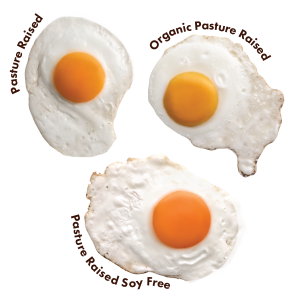 family farms that each source local feed and meet our standards for ethical farming and animal care, which means some variation is expected.
Some of the factors that can affect yolk color include:
- How much grass a chicken chooses to eat each day
- Environmental factors, including soil (dirt can sometimes lead to paler yolks)
- Whether the hen’s environment provides a wider nutritional input, such as berries, nuts, or vegetable scraps
- Feed ingredients: our local feed mill nutritionists* are intentional about mixing high-quality feed that supports hen health through each season. Some natural ingredients, such as paprika or marigold flowers, may be used to support balance and contribute to yolk color.
Like many things in farming, moderation and balance matter. Our mission is to support our farmers in doing what’s best for their hens every day.
*Utopihen Farms’ mission is to source ethically raised hens from locally owned and operated small family farms, helping keep these farms in business for the future. At this time, we do not have in-house nutritionists and instead rely on long-standing partnerships with local feed mills and nutritional experts.
How We Feed Hens Without Soy or Corn
Feeding hens without soy or corn takes extra care and creativity. Soy and corn free feed is still relatively new in the egg industry, and we work closely with local feed makers and expert nutritionists to help ensure our farmers have access to high-quality, plant-based options.
While exact feed formulas are proprietary, our goal is simple: to meet our hens’ nutritional needs with soy-free feed made from ingredients such as peas, alfalfa, vitamins, and other seasonally available, protein-rich ingredients that support a healthy, balanced diet.
Understanding Fatty Acids in Our Eggs
Independent lab testing, shown above, indicates a balanced mix of essential fatty acids. These levels can vary based on what a hen consumes each day, and we continue to learn and evaluate as part of our broader commitment to both hen wellbeing and human nutrition.
Added Omega-3?
We do not target any specific Omega-3 enrichment in our Utopihen Farms eggs.
Why Our Soy- and Corn-Free Eggs Are Not Organic

This is a great question. Organic certification requires that every feed ingredient be certified organic and available to our local feed mills. With soy- and corn-free feed, sourcing these ingredients can take additional time.
While our soy- and corn-free eggs are not currently organic, this hasn’t changed our mission. We are excited to share that we plan to launch an organic version of our soy- and corn-free eggs in 2026 and look forward to continuing this journey, one step at a time.
